A Trade war between America and India – Recent Update
The Russia-Ukraine conflict (since February 2022) has triggered significant disruptions in global energy markets, compelling nations to reconsider their supply chains, pricing strategies, and geopolitical alignments.
A Trade war between America and India – Recent Update
Prof Dr Ravinder Rena, Professor of Economics, School of Business
Introduction
The Russia-Ukraine conflict (since February 2022) has triggered significant disruptions in global energy markets, compelling nations to reconsider their supply chains, pricing strategies, and geopolitical alignments. In this dynamic landscape, Russian crude oil purchase by India has emerged as a striking development. From being a minor player in India’s import basket a few years ago, Russia has quickly become its single largest supplier, contributing roughly 38% of India’s crude imports in 2024–25. These flows, often priced below (about $55) international benchmarks, have allowed India to cushion its economy against volatile global prices and conserve valuable foreign exchange.
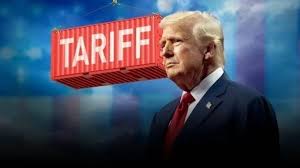
Yet, these transactions are not confined to the realm of economics. They carry profound geopolitical weight. The United States (US) has repeatedly raised its voice unease over India’s deepening energy ties with Moscow, particularly when these purchases are settled in Indian Rupees a currency other than the U.S. dollar. For Washington, such practices not only undermine the effectiveness of sanctions on Russia but also weaken the centrality of the dollar in global trade. This irritation has been reflected in increasing the tariffs from 25% to 50% against Indian goods on 27 August 2025, signaling growing trade frictions between two otherwise close partners. This created lots of agony for India resulting in investing more than Rs 20,000 crores in reexploring 44 different countries markets in the world.
In this context, the role of BRICS as a counterweight to Western financial dominance is becoming increasingly visible. Russia, China, and India are all exploring mechanisms to reduce reliance on the dollar, advancing the idea of a more multipolar economic order. For New Delhi, however, this creates a delicate balancing act: securing cheap and stable energy supplies while managing diplomatic expectations from both Western allies and non-Western partners.
The objective of this article is to examine three interrelated themes: the trade frictions between the U.S. and BRICS nations, American concerns about rupee-denominated oil purchases, and India’s dependence on Russian energy. Together, these issues highlight the intersection of economic pragmatism and geopolitical strategy shaping India’s policy choices.
Shifts in Global Energy Flows and India’s Strategic Role
The imposition of wide-ranging sanctions on Russia after its invasion of Ukraine in 2022 disrupted long-established patterns in global energy trade. Europe, historically Moscow’s largest energy customer, drastically reduced its dependence on Russian crude and natural gas, seeking alternatives in the Middle East, Africa, and the United States. This reconfiguration of demand created a vacuum in Russia’s export markets, compelling Moscow to redirect a substantial portion of its crude flows toward Asian economies. Among these, India emerged as a critical buyer, absorbing volumes that European refiners no longer wished—or were permitted—to purchase.
For India, this realignment created a unique opportunity. Traditionally reliant on suppliers such as Iraq, Saudi Arabia, and the United Arab Emirates, India had previously sourced only a negligible fraction of its crude from Russia. The sanctions, however, transformed Russia into one of India’s largest suppliers in just a matter of months. The key driver was economics: Russian crude was offered at steep discounts compared with international benchmarks like Brent. At the height of the realignment, the discount reached nearly $30 per barrel, making Russian cargoes significantly cheaper than alternatives. Although this differential later narrowed to a range of $2–7 per barrel, the price advantage remained compelling enough for Indian refiners to sustain purchases.
Beyond short-term savings, India’s energy policy is deeply shaped by its structural requirements. As the world’s third-largest oil importer, India depends on foreign sources to meet over 80% of its crude oil demand. This dependence makes cost-efficiency a national priority, particularly in the context of managing inflation, foreign exchange reserves, and industrial growth. By tapping into discounted Russian barrels, India not only reduced its import bill but also insulated its domestic economy from some of the turbulence in global oil markets.
India’s refining sector further amplified the logic behind these purchases. The country possesses one of the largest refining capacities in Asia, with several complex refineries capable of processing heavy and discounted crudes into higher-value products. This refining strength allows India not only to satisfy domestic consumption but also to re-export petroleum products such as diesel, gasoline, and aviation fuel. In this way, cheap Russian imports enhanced the profitability of India’s refiners while simultaneously boosting the country’s role as a net exporter of refined fuels.
The convergence of sanctions, discounts, and refining capacity thus created a mutually reinforcing cycle. Russia gained a reliable and large-scale outlet for its crude, cushioning the impact of Western sanctions, while India secured affordable energy inputs that strengthened both domestic stability and export competitiveness. Yet, this arrangement has also carried geopolitical implications, particularly as Western allies have grown increasingly uneasy about India’s willingness to deepen its energy relationship with Moscow. The tension underscores how shifts in global energy flows are never purely economically and intertwine with questions of power, alliances, and strategic autonomy.
India’s Trade with Russia
The trajectory of India’s oil trade with Russia over the past few years represents one of the most significant shifts in global energy dynamics. Until 2021, Russian crude accounted for less than 2% of India’s overall imports, a negligible share compared with long-standing suppliers in the Middle East such as Iraq and Saudi Arabia. By 2024–25, however, this figure had surged to over 35–40%, marking a dramatic transformation in the composition of India’s energy basket. This rapid expansion was not incidental; it reflected both the restructuring of Russia’s export markets following Western sanctions and India’s pragmatic pursuit of affordable energy.
The scale of trade between the two countries illustrates the magnitude of this shift. Before the Ukraine conflict, bilateral oil trade was modest, with crude imports from Russia valued at around $1.1 billion. Within just two years, the figure ballooned to over $50 billion, reflecting not only increased volumes but also the strategic prioritization of Russian supplies within India’s import framework. This explosive growth underscores India’s ability to capitalize on market opportunities created by geopolitical disruptions.
The economic benefits for India have been substantial. By securing heavily discounted Russian crude, Indian refiners helped the country save an estimated $25 billion in foreign exchange during the fiscal year 2023–24. These savings translated into macroeconomic advantages: reduced pressure on the rupee, greater fiscal space to manage subsidies, and more stable fuel prices for consumers.
In an economy where inflationary pressures and current account deficits are constant concerns, such gains provide much-needed breathing room. Moreover, cheaper crude improved the margins of Indian refiners, enabling them to strengthen their global position as exporters of petroleum products.
Policy-wise, India has consistently defended its decision to maintain oil purchases from Russia despite external pressure. New Delhi’s position is rooted in the principle of energy security and strategic autonomy. Officials have argued that India, as a sovereign and 4th largest economy in the world, cannot compromise affordable access to energy—particularly when alternatives would come at higher costs. By early 2025, Russia remained India’s second largest supplier after China (with 49% of its oil exports), accounting for about 35% of total imports, despite continued criticism from the United States and Europe. India’s stance highlights the pragmatism of its foreign policy: while engaging closely with Western partners on defense, technology, and security, it has chosen not to jeopardize its economic fundamentals by abandoning Russian supplies.
In conclusion, India’s oil trade with Russia demonstrates how economics and geopolitics are tightly intertwined. The surge from a 2% to a 35–40% share within just a few years reflects both the opportunities presented by global disruptions and India’s willingness to act decisively in its own interests. The financial benefits, reinforced by strong refining capabilities and innovative logistical arrangements, have cemented the relationship as a central pillar of India’s energy security. At the same time, the policy response underscores New Delhi’s delicate balancing act: ensuring affordable energy for its population while navigating the diplomatic complexities of a multipolar world order.
Tags
Prof Ravinder Rena
School of Business, Woxsen University, India
Contributor at Woxsen University School of Business