From Data to Decisions: How HR Analytics is Powering the People Strategy Revolution
HR Analytics is transforming HR from intuition-driven to evidence-based practice. By blending data, AI, and empathy, organizations are making smarter, fairer, and future-ready people decisions that drive both performance and purpose.
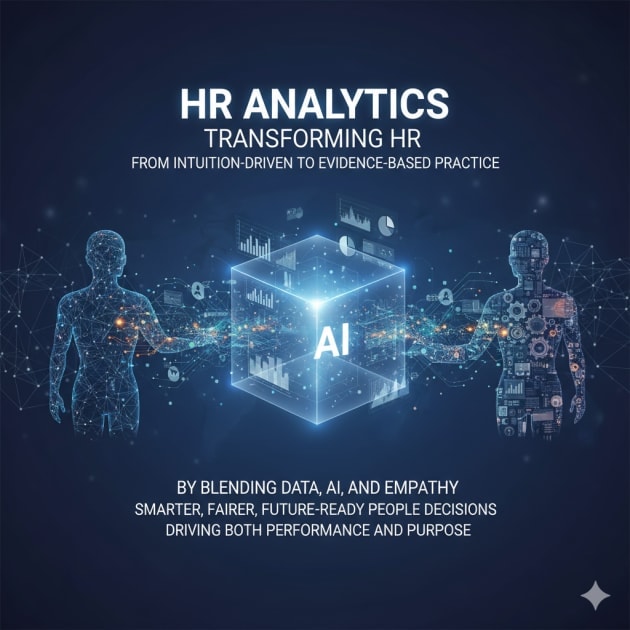
From Data to Decisions: How HR Analytics is Powering the People Strategy Revolution
By Dr. Nageswara Rao Aderla
In an era defined by data abundance, Human Resource Management (HRM) is evolving from intuition-driven practice to evidence-based science. The new frontier of HR Analytics powered by AI, big data, and predictive modeling is transforming how organizations understand their people, shape their culture, and sustain performance. No longer confined to administrative functions, HR has become the analytical heartbeat of business strategy.
Yet this transformation is not merely about crunching numbers; it’s about decoding human behavior to make smarter, fairer, and more future-ready decisions.
From Intuition to Insight: The Analytical Shift in HR
For decades, HR relied on experience and judgment to make decisions about hiring, promotions, or engagement. But as organizations scale and workforce complexity grows, data-driven decisions have become indispensable. Modern HR analytics integrates information from multiple sources recruitment platforms, performance systems, learning tools, and even social interactions to identify trends invisible to the human eye.
Imagine predicting which employees are at risk of burnout before it happens, or understanding the hidden drivers of innovation within teams. Such insights turn HR from a reactive department into a proactive strategic partner.
The Three Layers of HR Analytics
To truly leverage analytics, HR professionals must navigate three interlinked layers:
Descriptive Analytics – What happened?
This layer looks backward, summarizing key workforce metrics such as turnover rates, absenteeism, or engagement scores. It establishes a factual foundation.Predictive Analytics – What might happen next?
Using statistical models and machine learning, predictive analytics forecasts future trends identifying who is likely to leave, who might excel, or which teams need intervention.Prescriptive Analytics – What should we do about it?
The highest level, prescriptive analytics, offers actionable recommendations. It empowers HR leaders to simulate different scenarios like how flexible working or new leadership training could influence retention.
Together, these layers shift HR from reporting history to shaping destiny.
Beyond Metrics: The Human Context of Numbers
The power of analytics lies not in data itself, but in interpretation. Numbers can tell what is happening, but understanding why it’s happening requires empathy and context. HR analytics, therefore, is not about replacing human judgment it’s about augmenting it with clarity and confidence.
For example, a predictive model might flag a high-performing employee as a potential flight risk. But only a human manager, through conversation and empathy, can uncover the deeper story perhaps a lack of recognition, a family relocation, or career stagnation.
In Industry 5.0, data and dialogue must co-exist to drive meaningful change.
Building a Data-Driven HR Culture
The journey toward data-driven HR begins with cultural transformation, not technology. Organizations must:
Invest in HR data literacy across all levels so that insights are interpreted accurately and ethically.
Ensure data transparency and fairness, particularly in algorithmic decision-making.
Integrate analytics into leadership development, enabling managers to use data as a tool for empathy, not surveillance.
Link HR metrics to business outcomes, demonstrating how people decisions directly impact profitability, innovation, and sustainability.
When analytics becomes a shared language between HR and leadership, decision-making evolves from reactive to strategic.
The Future: Human Intelligence Meets Artificial Intelligence
As AI tools mature, HR analytics is moving toward real-time decision ecosystems where dashboards provide continuous insight into workforce sentiment, productivity, and well-being. Yet the most successful organizations will not be those with the most sophisticated algorithms, but those that remember what data can never replace: human insight, compassion, and purpose.
In the decade ahead, HR professionals will need to blend the precision of a data scientist with the sensitivity of a psychologist. The future CHRO will be both a strategist of numbers and a custodian of humanity.
Conclusion: Turning Insight into Impact
HR analytics is not about replacing gut instinct it is about refining it through evidence. By translating data into insight and insight into action, HR leaders are shaping workplaces that are not only more efficient but also more empathetic.
At Woxsen University and beyond, this is the heart of the People Strategy Revolution: using data not to control people, but to empower them.