Indian Corporates: Pioneering Progress on SDGs 11, 12, and 13 Amid Rising ESG-Financial Synergies
As India hurtles toward its ambitious 2030 Sustainable Development Goals (SDGs) timeline, the corporate sector stands at the forefront, weaving sustainability into the fabric of economic growth.
Indian Corporates: Pioneering Progress on SDGs 11, 12, and 13 Amid Rising ESG-Financial Synergies
Dr. Vishakha Jha,
Assistant Professor
SOB Woxsen University
As India hurtles toward its ambitious 2030 Sustainable Development Goals (SDGs) timeline, the corporate sector stands at the forefront, weaving sustainability into the fabric of economic growth. With a GDP projected to surpass $5 trillion by 2027, Indian firms are not just complying with mandates like the Companies Act, 2013 requiring 2% of net profits for CSR but actively aligning with UN SDGs to drive innovation and resilience. This article delves into the contributions of leading Indian companies to SDGs 11 (Sustainable Cities and Communities), 12 (Responsible Consumption and Production), and 13 (Climate Action), while exploring the robust correlations between ESG performance and financial metrics. Drawing from recent reports and studies, it reveals how these efforts are yielding measurable financial upsides, even as challenges like greenwashing and data gaps persist.
Interlinked Goals: Urban Resilience Meets Circular Economies and Climate Urgency
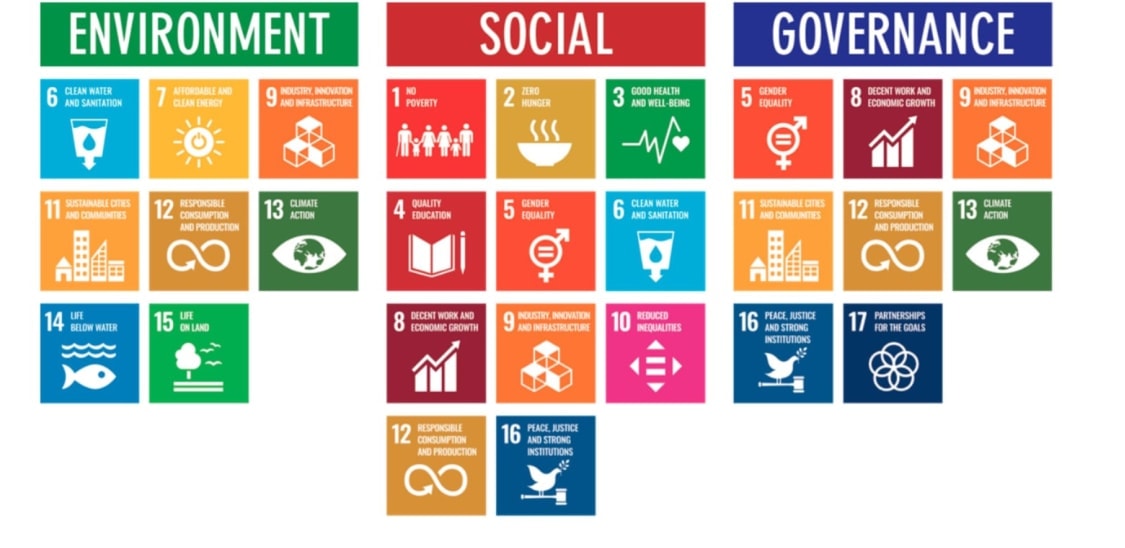
SDGs 11, 12, and 13 are inextricably linked, forming a triad that addresses India's urban boom expected to house 600 million people in cities by 2036 while tackling resource scarcity and a warming planet. SDG 11 emphasizes inclusive, safe, and resilient cities through green infrastructure and disaster mitigation. SDG 12 promotes efficient resource use and waste reduction via circular models, crucial amid India's 62 million tons of annual waste. SDG 13 demands immediate climate mitigation, aligning with India's net-zero pledge by 2070 and Nationally Determined Contributions (NDCs) for 50% non-fossil energy by 2030.
Corporate India, through ESG frameworks mandated by SEBI's Business Responsibility and Sustainability Reporting (BRSR), is channeling over ₹25,000 crore annually into these areas via CSR and core operations. NITI Aayog's coordination has mapped these goals to flagship programs, with states localizing efforts yet private sector innovation remains the accelerator.
Spotlight on SDGs: Key Focus Areas for Indian Firms
India's corporate sector aligns CSR mandates under the Companies Act, 2013, with UN SDGs, channeling 2% of profits into initiatives that foster inclusivity and resilience. Here's a breakdown of SDGs 11, 12, and 13:
SDG 11: Sustainable Cities and Communities – Targets inclusive urbanization, disaster resilience, and cultural preservation. Indian firms contribute via smart infrastructure and slum rehabilitation, reducing urban vulnerability amid rapid migration.
SDG 12: Responsible Consumption and Production – Emphasizes efficient resource use, waste reduction, and sustainable supply chains. With India's plastic waste crisis, companies are pivoting to circular economies.
SDG 13: Climate Action – Urges urgent mitigation through emissions cuts and renewable adoption. Aligned with India's NDCs, firms are targeting net-zero by 2050.
These goals intersect: Urban projects (11) often incorporate green procurement (12), while climate resilience (13) demands sustainable urban planning.
Key Contributions by Leading Companies
Tata Power advances SDG 11 via sustainable urban energy solutions and SDG 13 through net-zero goals by 2025, while promoting SDG 12 with zero-waste initiatives and circular economy practices. Reliance Industries supports SDG 11 with urban renewal projects like green spaces and improved infrastructure, links to SDG 13 via rural renewable energy and decarbonization and fosters SDG 12 through disaster-resilient communities. ITC leads in SDG 13 with 52% renewable energy use and net-zero operations by 2050, integrates SDG 12 via circular economy and water stewardship reviving river basins, and aids SDG 11 through biodiversity projects enhancing coastal urban resilience.
Adani Green Energy and Adani Transmission bolster SDG 13 by scaling renewable capacity to 45 GW by 2030 and displacing millions of tCO2, while contributing to SDG 11 with reliable green power infrastructure for sustainable cities. Hindustan Unilever targets SDG 12 by cutting plastic waste and promoting recycling, indirectly supporting SDG 13's emission reductions and SDG 11's cleaner urban environments. Mahindra Group's sustainable agriculture under SDG 13 also ties into SDG 12's responsible production for resilient rural-urban linkages.
Spotlight on Trailblazers: Corporate Contributions in Action
Top Indian conglomerates are embedding these SDGs into business models, turning sustainability into competitive edges. Here's a snapshot of key players and their 2024-2025 impacts, drawn from sustainability reports and UN-aligned disclosures:
Company | Sector | SDG 11 Initiatives (Sustainable Cities) | SDG 12 Initiatives (Responsible Consumption) | SDG 13 Initiatives (Climate Action) | Key 2024-2025 Impact Metrics |
Tata Group (incl. Tata Steel, TCS) | Diversified/Steel/IT | Urban green mobility via EV charging networks in 50+ cities; slum redevelopment in Mumbai. | Zero-waste steel production; circular supply chains recycling 95% scrap. | Green steel pilots with hydrogen tech; 30% renewable energy portfolio. | 1.5M tons CO2 reduced; 20K EVs deployed. |
Reliance Industries | Energy/Conglomerate | Jamnagar smart city expansion with IoT for waste management. | Plastic-to-fuel recycling hubs processing 1M+ tons annually. | 100 GW solar/wind target by 2030; net-zero roadmap. | 25% emissions cut; 500K tons plastic recycled. |
Mahindra & Mahindra | Auto/Engineering | Sustainable rural-urban habitats; EV infrastructure in Tier-2 cities. | Battery recycling for 80% material recovery; no-plastic policy. | Formula E racing for green tech R&D; 50% renewable ops. | India's top EV maker; 40% carbon footprint reduction. |
Hindustan Unilever (HUL) | FMCG | Water access projects in urban slums; eco-packaging pilots. | 100% recyclable packaging; sustainable sourcing for 80% agri inputs. | Climate-resilient farming for 1M+ smallholders; Scope 3 emissions tracking. | 1B fortified nutrition servings; 355B gallons water conserved. |
ITC Limited | Diversified/FMCG | Social forestry for urban green belts; watershed management in 20 states. | Rainforest Alliance-certified sourcing; zero-food-waste in supply chains. | Carbon-neutral operations; 100% renewable electricity by 2030. | 3M hectares reforested; 50% waste diverted from landfills. |
Infosys | IT | Green campuses as urban sustainability models in Bengaluru/Pune. | E-waste recycling for 99% IT assets; paperless initiatives. | AI for emissions forecasting; net-zero by 2040. | 50% renewable energy; 1M trees planted. |
Larsen & Toubro (L&T) | Infrastructure | Smart city projects (e.g., Amaravati Phase II); resilient urban infra. | Green procurement for 70% materials; construction waste recycling. | Low-carbon cement tech; $200M sustainability loans. | 25% project emissions reduced; 100K urban jobs created. |
Wipro | IT | Urban biodiversity corridors; sustainable office retrofits. | Sustainable IT procurement; zero-plastic campuses. | Carbon-neutral by 2030; reforestation in 10 cities. | 40% water savings; 500K tons CO2 offset. |
These initiatives, often UN Global Compact signatories, demonstrate synergies: HUL's sustainable sourcing (SDG 12) bolsters climate-resilient supply chains (SDG 13), while L&T's urban projects (SDG 11) incorporate circular waste systems. In FY24, environmental CSR spend hit 13% of total outlay, focusing on renewables and waste reduction.
Hurdles on the Horizon: From Greenwashing to Data Deficits
Progress is evident India advanced in SDG 11 and 13 since 2018 but gaps loom. Only 53% of NIFTY 50 firms fully disclose SDG metrics, with energy sectors lagging on E-scores. Greenwashing affects 40% of claims, eroding trust, while regional disparities hinder SDG 12 scaling. SEBI's 2026 BRSR upgrades aim to enforce deeper reporting, but firms must prioritize verifiable impacts.
Opportunities shine in policy-tech convergence: AI for emissions tracking (Infosys) and circular hubs (Reliance) could unlock $11 trillion in green value by 2070. Investors, note: ESG funds grew 30% YoY, favoring SDG integrators.
A Call for Collective Momentum
Indian companies are not mere participants in the SDG journey they are architects. By fusing SDG 11's urban vision with 12's efficiency and 13's urgency, firms like Tata and HUL are scripting a resilient future, backed by financial tailwinds from ESG prowess. As 2030 approaches, the imperative is clear: Scale innovations, bridge data chasms, and embed accountability. For policymakers, amplify sub-national ties; for corporates, let sustainability fuel the $5-trillion engine. The green revolution isn't coming it's here, powered by India's boldest boards.
References
https://fulcrum.vision/wp-content/uploads/2025/06/Bharat-CSR-Performance-Report-2025-1.pdf
https://www.linkedin.com/pulse/top-csr-initiatives-india-leading-example-kadiri-raghu-vamsi-onpbc
https://www.tandfonline.com/doi/full/10.1080/23311975.2021.1985686
https://www.linkedin.com/pulse/what-projects-count-under-sdg-13-climate-action-csr-whu8c
https://www.tatatrusts.org/upload/pdf/report-tata-group-and-the-sdgs.pdf
https://www.ril.com/sites/default/files/2023-11/ril_sr2011_12.pdf
https://itcportal.com/about-itc/sustainability/addressing-climate-change.html
https://csrboximpact.in/storage/publications/Official%20ICOR%20Report%202025_Publication_Website.pdf