Intrinsic value of a digital currency
The intrinsic value of digital currency is important to an informed decision for investment and therefore, it is a great challenge for investors and analyst to quantify the value of digital currency by considering its all benefits and risks.
Introduction
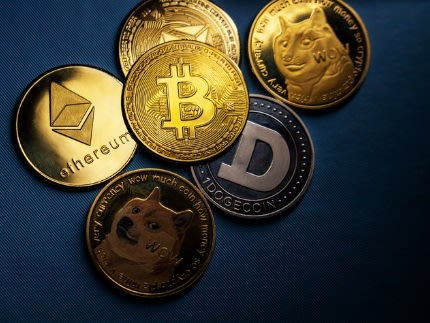
Digital currency refers to money that exists only in electronic form and is not physically tangible like coins or paper notes. It can be used to buy goods and services, transfer value, or serve as a store of wealth—just like traditional money. Digital currencies have emerged as a new asset class attracting investors worldwide. They offer opportunities for high returns, but also come with significant risks due to volatility and regulatory uncertainty. Some of the major digital currencies are: Bitcoin, Ethereum, Solana, Dogecoin, XRP etc. Nonetheless, digital currencies are good investment avenues but before investment, a question usually comes in the mind of an investor - what is the intrinsic value of a digital currency? How it can be evaluated for investment?
Intrinsic value
The intrinsic or fundamental value of a commodity is derived from the benefits associated with it. If currencies are backed by the gold or silver then it must also have intrinsic value. However, today the fiat currency is not backed by gold and thus, it shouldn’t have intrinsic value theoretically. Similar to the fiat currency, the digital currency is not backed by gold or silver and hence, no intrinsic value. However, the currency gets its value because of backing from the government in which we people have trust. The same thing is happened with the digital currency. According to Gupta (2020), “The trust which millions of people have imparted on a cryptocurrency in a completely trust less environment decides the value of the cryptocurrency. Millions of miners and traders are altogether considered the participants of the digital currency network who trust the world’s largest cryptocurrency and are deciding its price on the sole principle of its demand and supply.” Several opinion, studies and literatures are available regarding the intrinsic value of digital currency. According to Lewis (2017), digital currency is used for exchange of goods and services. It is useful for many things. For example, it is a costless way of transferring value; it doesn’t use banking system; people can use it even with the help of smartphone and it also doesn’t leave paper trails. Privacy concern in transaction is also very high. Therefore, by using the digital currency, people are deriving the value from it and hence, it has certain intrinsic value.
According to Cockrell (2017), Chicago Booth Initiative on Global market conducted a survey with economic expert and the result shows that only 4% of the respondents have opinion that bitcoin has fundamental value of at least $1,000. 56% respondents have no opinion and 25% have opinion that the fundamental value would be the 2-years forecasted value of bitcoin. Hayes (2018) uses conventional regression and vector autoregression (VAR) model to show that bitcoin’s price is significantly determined by the marginal cost of production and hence, challenges the allegation that bitcoin has no value. The valuation model shows a significant fundamental value of digital currency.
In contrast of findings in support of fundamental value of digital currency, Cheah and Fry (2015) conclude on the empirical study that bitcoin has zero intrinsic value. Similar finding is also made by the Coy (2021) who contends that very high volatility in digital currency makes the people vulnerable for its stability and therefore, due to high uncertainty, it is difficult to quantify the intrinsic value of a digital currency. According to Bouoiyour et al (2015), digital currency is backed by the expectation and trust of the people and thus, acceptance of digital currency shows its speculative characteristics. It is a quite risky instrument and failure may lead to huge loss. Therefore, digital currency doesn’t hold any intrinsic value.
Conclusion
Overall, it is concluded that few of the studies and experts’ opinion support the intrinsic value of digital currency while others don’t. Despite of high volatility and speculative nature of digital currency, it is extensively used for many financial transactions. The digital currency has great advantages and has potential to revolutionize the entire ecosystem of payment and transaction. In near future, it would be a great avenue for investment. Therefore, it is imperative to quantify its intrinsic value for an informed and sustainable investment.
References
Gupta, S (2020). Bitcoin Has No Intrinsic Value”. Then What Gives Bitcoin Value? Retrieved from: https://aithority.com/guest-authors/bitcoin-has-no-intrinsic-value-then-what-gives-bitcoin-value/
Cockrell, J (2017). What is the fundamental value of a bitcoin? Retrieved from: https://www.chicagobooth.edu/review/whats-fundamental-value-bitcoin
Lewis, N (2017). What Is The Fundamental Value of Bitcoin? Retrieved from: https://www.forbes.com/sites/nathanlewis/2017/12/07/what-is-the-fundamental-value-of-bitcoin/?sh=4709057c545a
Cheah, E and Fry, J (2015). Speculative bubbles in Bitcoin markets? An empirical investigation into the fundamental value of Bitcoin. Economic Letters. Vol.130, pp. 32-36. Retrieved from: https://www.sciencedirect.com/science/article/abs/pii/S0165176515000890
Coy (2021). Bitcoin has zero intrinsic value. Some people are okay with that. Retrieved from: https://www.bloomberg.com/news/articles/2021-03-09/bitcoin-has-zero-intrinsic-value-some-people-are-ok-with-that
Bouoiyour, et al (2015). What determine bitcoin’s value? Retrieved from: https://www.researchgate.net/publication/277311968_What_determines_Bitcoin%27s_value