PepsiCo Picks Poppi, Others Pause: The High Price of Hesitation in a Billion-Dollar Economy
Indecision may feel harmless at a street‑food cart, but scale it up and it becomes an economic tragedy. This article explores the “paralysis of analysis,” where hesitation inflates costs, erodes agility, and leaves opportunities devoured by competitors.
PepsiCo Picks Poppi, Others Pause: The High Price of Hesitation in a Billion-Dollar Economy
By: A Perpetually Hesitant Economist
Picture this: a man stands in front of a street food cart. He’s hungry. He’s got ₹20. But he’s unsure. Should he go for the spicy vada pav? The cheesy corn toast? Or just walk away and chew his regrets? Ten minutes later, the snacks are gone, the cart’s rolled away, and he’s still hungry. Multiply that indecision by a billion rupees, and welcome to macroeconomics.
The Paralysis of Analysis
At the individual level, indecision is annoying. At the macro level, it’s catastrophic. Projects stall, budgets balloon, and opportunities evaporate faster than chai at a board meeting. Strategic hesitation doesn’t just delay progress it distorts cognition and erodes competitive advantage. Gavetti and Rivkin (2007)[1] argue that delayed strategic action leads to missed opportunities and diminished organizational agility, especially when leaders overthink instead of act.
The Price of Pondering
Let’s talk numbers. A delayed infrastructure project in India can cost crores in escalation. Steel prices rise, labor costs inflate, and by the time the cement mixer rolls in, the budget’s been blown to Mars. The FasterCapital[2] report calls this the “Slowdown Syndrome,” where hesitation leads to diseconomies of scale. Translation: the longer you wait, the more you pay for less.
Confidence: The Missing Ingredient
Why do people hesitate? Because confidence is like Wi-Fi in a basement rare and unreliable. The Cambridge study[3] found that delaying decisions impairs recall and increases bias. In short, the longer you think, the foggier your brain gets. It’s like trying to remember your ATM PIN after three cups of ultra-sweet roadside lassi.
Kraftwerke Grün: The Man at the Food Cart
Imagine Kraftwerke Grün as a man at the food cart. He’s got €20 million and a hunger to survive. But instead of picking a snack namely solar, wind, or hybrid tech, he waits. The cart rolls away. His competitors eat up the market. And he’s left with a bloated budget and a bruised head, literally!
This isn’t just metaphor; it’s boardroom reality. In a 2025 Harvard Business Review case study, Kraftwerke Grün’s[4] CEO Alex Reinhardt collapsed from burnout while the company stalled on key decisions post-government bailout. The leadership’s hesitation delayed restructuring, missed market opportunities, and inflated costs, all while rivals surged ahead.
Indian Railways Freight Corridor: The Metro Line Metaphor
Now shift the lens to India. The Dedicated Freight Corridor (DFC), India’s ambitious plan to revolutionize freight transport faced years of delays due to indecision over land acquisition, route alignment, and contractor selection. Originally slated for completion in 2017, parts of the corridor were still under construction in 2025.
The result? Escalated costs, missed logistics efficiencies, and a ripple effect on GDP growth. According to the Comptroller and Auditor General (CAG), delays added thousands of crores to the budget, while private logistics firms built their own infrastructure to bypass the wait.
PepsiCo: The Billion-Dollar Decider
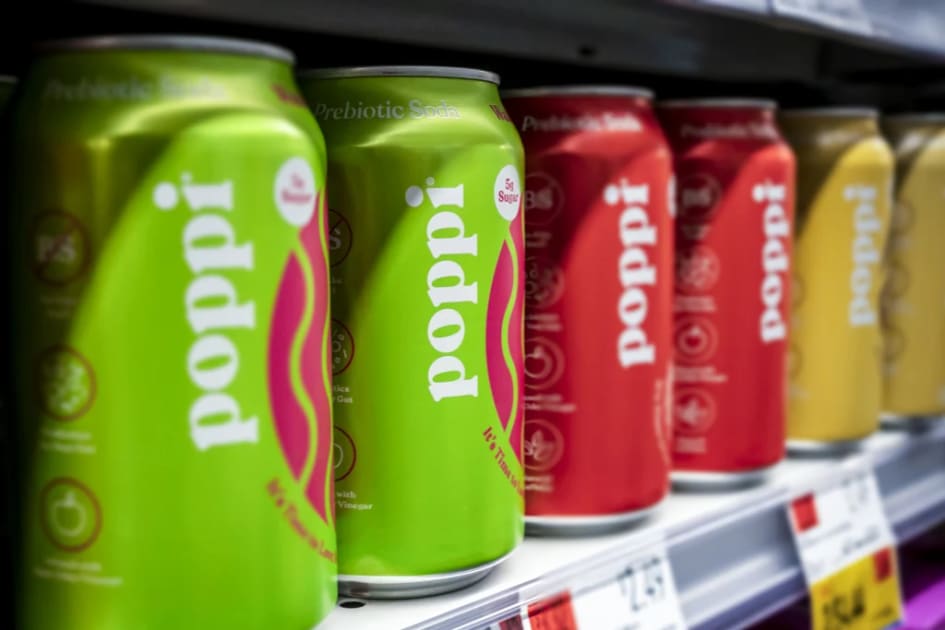
Now let’s talk about a company that didn’t hesitate: PepsiCo. In 2025, the global beverage giant made a bold move by acquiring Poppi, a fast-growing prebiotic soda brand for $1.95 billion. While many legacy brands were still debating how to appeal to Gen Z, PepsiCo acted.
Why? Because Poppi had already captured the zeitgeist. It leaned into TikTok trends, influencer marketing, and gut health long before it was mainstream. PepsiCo didn’t wait for the wellness market to stabilize; it created stability by owning it.
This wasn’t just a beverage deal. It was a masterclass in decisive strategy. PepsiCo saw the cart, picked the snack, and devoured the opportunity; before someone else did.
Where Kraftwerke Grün stalled, Poppi surged. The contrast is stark: hesitation hemorrhages opportunity, while boldness builds billion-dollar brands.
The Hilarious Economics of Hesitation
Opportunity Cost: Every “maybe” is a “no” to something better.
Inflation: While you wait, prices don’t.
Decision Deficit Disorder: A chronic condition affecting committees, boards, and WhatsApp groups.
Final Word: Decide Already!
Confidence isn’t about being right, it’s about being decisive. Whether it’s choosing a vada pav or greenlighting a ₹10,000 crore project, hesitation costs money, time, and sanity. So next time you’re stuck in a loop of “should I?”, remember: even a wrong decision is better than no decision.
Because in economics, as in life, the cost of inaction is always higher than the cost of imperfection. So, sometimes, the best move is any move. Because when the winds of indecision howl and the tides of inflation rise, anchoring in some port, any port, might just save the ship. Any port in the Storm! Or in Poppi’s case, any soda in the fridge!
[1]Gavetti, G., & Rivkin, J. W. (2007). On the origin of strategy: Action and cognition over time. Strategic Management Journal, 28(6), 591–614. https://doi.org/10.1002/smj.625
[2] FasterCapital. (n.d.). Delayed decision-making: The slowdown syndrome and diseconomies of scale. FasterCapital.
[3] Cambridge University Press. (n.d.). The benefits of deciding now and not later: The influence of the timing between acquiring knowledge and deciding on decision confidence, omission neglect bias, and choice deferral. Judgment and Decision Making.
[4] Manzoni, J.-F. (2025). Case study: The CEO suffered a breakdown. Now what? Harvard Business Review, Jan–Feb 2025.