Redefining Teaching Skills and Pedagogical Strategies in the post-COVID Era
The post-COVID era transformed education into a blend of digital and physical learning.Teachers now need digital literacy, empathy, flexibility, and data-driven strategies. By integrating technology with human connection, educators can foster inclusive, adaptive, and resilient learning environments.
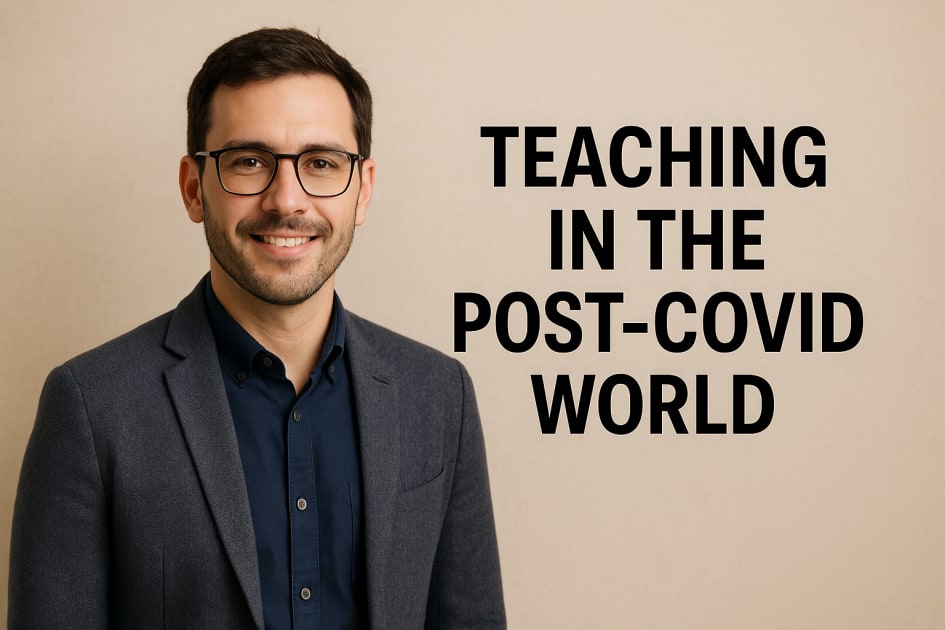
Redefining Teaching Skills and Pedagogical Strategies in the Post-COVID Era
S. Suman Babu
Professor, School of Business
Woxsen University
Introduction
The COVID-19 pandemic disrupted education systems worldwide, compelling teachers and institutions to rapidly adapt to digital and hybrid modes of teaching. While the crisis exposed inequalities and technological gaps, it also accelerated educational innovation and digital literacy among educators. As we move into the post-COVID world, teaching can no longer revert entirely to traditional methods. Instead, it demands a balanced, adaptive, and technology-integrated approach that prioritizes student engagement, inclusivity, and resilience. The post-pandemic educator must possess a diverse skill set and employ innovative strategies to meet the evolving needs of learners in an uncertain, interconnected world.
1. The Changing Landscape of Education
The post-COVID educational landscape is characterized by flexibility, blended learning environments, and technology-enhanced pedagogy. The pandemic blurred the boundaries between physical and virtual classrooms, giving rise to a “phygital” model—where physical and digital learning coexist. Teachers now face the dual challenge of managing in-person interactions while maintaining the digital competencies gained during remote teaching. Moreover, students’ learning behaviours have changed significantly. Many have grown accustomed to self-paced, technology-driven learning, while others continue to struggle with motivation and mental health concerns. Hence, teaching in the post-pandemic world is not just about delivering content; it is about creating an inclusive, empathetic, and engaging learning experience that bridges digital divides and supports diverse learners.
2. Essential Teaching Skills for the Post-COVID Era
a. Digital Literacy and Technological Adaptability
Digital literacy has become a core teaching competency. Teachers must be proficient in using learning management systems (LMS), video conferencing platforms, online assessment tools, and digital collaboration applications. Beyond technical know-how, educators need to understand how to integrate technology pedagogically—to enhance, rather than replace, the learning process. Tools such as Google Classroom, Microsoft Teams, Moodle, and AI-driven platforms like ChatGPT or Coursera have become indispensable for creating interactive and personalized learning experiences.
b. Emotional Intelligence and Empathy
The pandemic took a toll on the emotional well-being of both students and teachers. Post-COVID classrooms require emotionally intelligent educators who can identify signs of anxiety, burnout, or disengagement. Empathy allows teachers to build trust and foster a safe learning environment. By acknowledging students’ emotional states and adapting communication styles, teachers can better motivate learners and sustain their participation.
c. Flexibility and Adaptability
The ability to pivot between face-to-face, hybrid, and online modes is now a critical skill. Teachers must design flexible lesson plans that can function in multiple formats. The pandemic taught educators that change can be sudden and unpredictable; therefore, adaptability—both pedagogical and psychological—is essential for maintaining educational continuity.
d. Communication and Collaboration Skills
In the post-COVID context, effective communication extends beyond verbal interaction. Teachers must leverage multiple digital channels to ensure clarity, consistency, and accessibility. Additionally, collaborative skills are vital for co-creating learning experiences with peers, parents, and students. Collaborative teaching fosters interdisciplinary learning and helps share best practices for technology use and classroom engagement.
e. Data-Driven Decision-Making
With the rise of digital tools comes an abundance of student data. Teachers must learn to interpret analytics from learning platforms to assess progress, identify learning gaps, and personalize instruction. Data literacy helps educators move from intuition-based to evidence-based teaching, improving outcomes and accountability.
3. Pedagogical Strategies for the Post-Pandemic Classroom
a. Blended Learning Models
Blended learning combines the best of both worlds—face-to-face instruction and online learning. Flipped classrooms, where students review materials online before class and engage in deeper discussions during in-person sessions, have proven effective in enhancing critical thinking and engagement. Such models promote autonomy while allowing teachers to focus on higher-order learning activities during contact hours.
b. Active and Experiential Learning
The pandemic highlighted the limitations of passive learning. In the post-COVID world, active learning approaches such as problem-based learning, simulations, and project-based assignments are essential. These methods encourage collaboration, creativity, and real-world problem-solving—skills that students need to navigate the complexities of modern life and work.
c. Inclusive and Accessible Education
Digital education must be inclusive of all learners, regardless of socioeconomic status, location, or ability. Teachers should adopt Universal Design for Learning (UDL) principles—offering multiple means of engagement, representation, and expression. Captioned videos, assistive technologies, and asynchronous materials can help accommodate diverse learning needs and ensure equity in education.
d. Continuous Professional Development
The post-COVID era demands lifelong learning not only from students but also from teachers. Continuous professional development (CPD) enables educators to stay updated on pedagogical innovations, emerging technologies, and mental health awareness. Online courses, webinars, and teacher learning communities provide opportunities to exchange experiences and improve instructional effectiveness.
e. Integration of Artificial Intelligence and Emerging Technologies
Artificial Intelligence (AI) tools, augmented reality (AR), and virtual reality (VR) are transforming the classroom. AI can personalize learning, automate assessments, and provide real-time feedback. For example, AI-driven tutoring systems can identify struggling students early, while AR/VR can create immersive learning experiences in science, history, and art. Teachers should learn to harness these technologies ethically and creatively to enhance engagement and comprehension.
4. Rebuilding the Human Connection
While technology plays a central role, the essence of education remains deeply human. The post-pandemic world reminds us that empathy, mentorship, and relationships are irreplaceable. Teachers must focus on rebuilding social interaction, collaboration, and community among learners who experienced prolonged isolation. Hybrid classrooms should prioritize peer discussion, teamwork, and reflective dialogue to rebuild students’ confidence and social skills.
Conclusion
Teaching in the post-COVID world is a dynamic blend of technology, empathy, flexibility, and innovation. The educator’s role has expanded from content delivery to that of a facilitator, mentor, and designer of learning experiences. As classrooms evolve, the focus must shift toward human-centered, data-informed, and technology-enabled education that nurtures critical thinking, creativity, and emotional resilience. The post-pandemic teacher is not just a transmitter of knowledge but a builder of adaptive learning ecosystems—capable of guiding students through uncertainty while preparing them for a rapidly changing world.
Tags
Comments (1)
A deeply thought-provoking and well-articulated analysis, Professor S. Suman Babu. Your reflections on the post-COVID transformation in education eloquently highlight the evolving role of educators in a technology-driven yet deeply human learning environment. The integration of “phygital” pedagogy, emotional intelligence, and data-informed decision-making reflects a visionary understanding of modern teaching. This comprehensive perspective not only underscores the importance of adaptability and inclusivity but also inspires educators to embrace innovation with empathy and purpose. Your insights serve as a valuable contribution to reimagining education for a resilient, connected, and future-ready world.