Role of GABAergic interneurons in Neuronal Dynamics and Proposed Scheme for Development of Pattern Classifier to Manage Brain Disorders
The external environment influencing emotions like fear, anger, and anxiety directly affects cortical activity and decision-making. Neuronal balance between excitatory Glutamatergic and inhibitory GABAergic signals determines firing behavior. Excessive excitation leads to disorders.
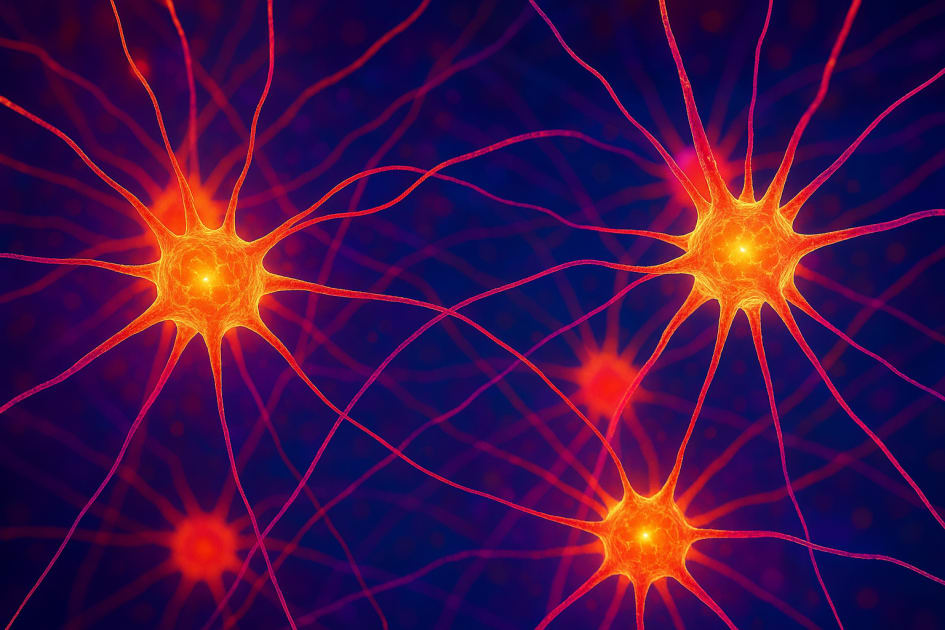
The external environment that causes fear, depression, anger, insecurity, and anxiety in a person has a direct influence on the safety measures to be taken by cortical activity. It is the degree of trouble that decides the speed of information processing and the moment of decision. Initially, the information sensed by the dendrites determines whether the Glutametergic principal neurons are to fire or the inhibition by GABAergic interneurons is to occur. If Glutamatergic principal neurons release the positive ions, they will cause the neuron, which is at resting potential, to achieve an action potential, and the neuron will fire. It is because of higher EPSP, which increases the excitation rate. Whereas if the dendrites' information causes the inhibition, GABAergic interneurons release negative ions, causing the resting potential to drop below the action potential, and neurons will not fire. It is because of higher IPSP, which increases the inhibition rate.
Neurodegenerative disorders such as Depression, Frustration, sleep disorder, Epilepsy, Alzheimer's, do not let the cortical activity in the circuit maintain the balance. The cortical imbalance is required to be broken, and normalcy is required to be restored. It can be realised if the inhibition process caused by GABAergic interneurons is taken up in a requisite manner. Since a higher excitation rate mostly causes the disorders, this rate is controlled by improving the rate of GABAergic inhibition. It thus leads to the control of the disorder.
This article presents a scheme in which based on Pattern Recognition to analyse the complex disorders in Human brain. The proposal states that , initially EEG signal would be collected from human brain and will be processed to extract features. Based on these features the pattern classifier would extract out the type of disorder. Later the severity of the disorder would be checked. This will help in determining the potency and frequency of medicine would be practiced. After the medication the patient would be checked for restoration of normalcy. Based on percentage of removal of disorder the medicines will be re-decided or stopped as the case maybe. The overall scheme for the same is as presented in Fig.1.

The development of such classifiers should help to better manage brain disorders.