SDG 2 in Focus: Ending Hunger and Promoting Sustainable Food Systems
Sustainable Development Goal 2 (SDG 2), titled "Zero Hunger," is a global commitment adopted by the United Nations with the ambitious objective to end hunger, achieve food security and improved nutrition, and promote sustainable agriculture by the year 2030.
SDG 2 in Focus: Ending Hunger and Promoting Sustainable Food Systems
By Dr. Vishakha Jha
Sustainable Development Goal 2 (SDG 2), titled "Zero Hunger," is a global commitment adopted by the United Nations with the ambitious objective to end hunger, achieve food security and improved nutrition, and promote sustainable agriculture by the year 2030. Hunger remains a severe challenge worldwide, with millions still suffering from chronic malnutrition and food insecurity, which compromises the health, productivity, and future prospects of individuals, communities, and nations.
The essence of SDG 2 is to create a world free of hunger and malnutrition, ensuring that safe, nutritious, and sufficient food is accessible to all, particularly the most vulnerable segments such as infants, children under five, pregnant and lactating women, indigenous people, small-scale farmers, and marginalized groups. According to recent global data, over 757 million people experienced hunger in 2023, roughly one in every 11 people worldwide. The COVID-19 pandemic, combined with ongoing conflicts, climate change, and increasing inequalities, has worsened food insecurity, causing a near halt or reversal of progress made in previous years.
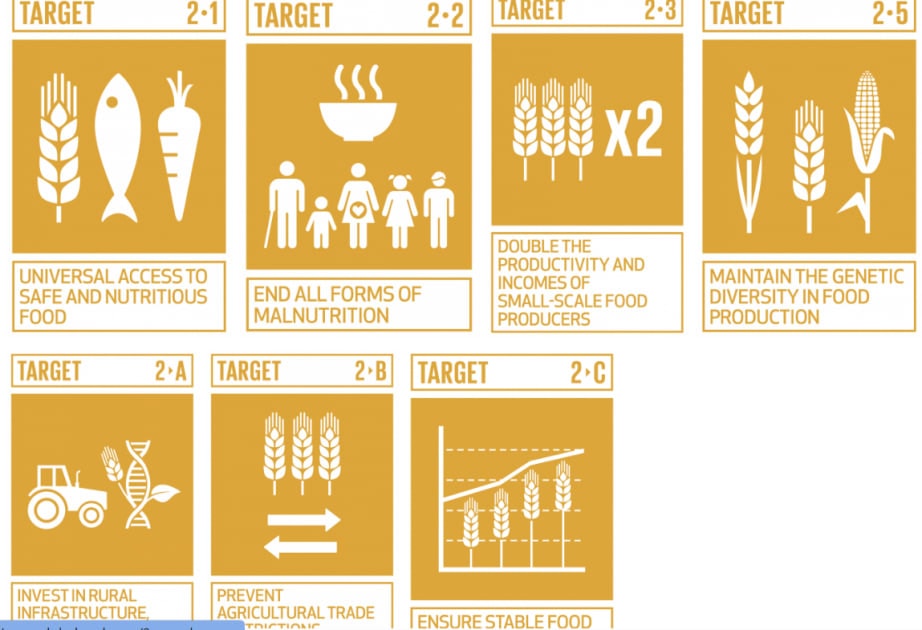
SDG 2 outlines eight main targets, supported by numerous measurable indicators. These targets broadly include:
Ending hunger and ensuring universal access to sufficient, safe, and nutritious food year-round, focusing on vulnerable populations. This encompasses reducing the prevalence of undernourishment and food insecurity.
Ending all forms of malnutrition, with a focus on achieving internationally agreed targets on stunting and wasting in children under five by 2025 and addressing the nutritional needs of adolescent girls, pregnant and lactating women, and the elderly.
Doubling agricultural productivity and incomes of small-scale food producers, especially women, indigenous peoples, family farmers, pastoralists, and fishers. This involves securing equal access to land, financial services, markets, knowledge, and technologies.
Ensuring sustainable food production systems and resilient agricultural practices that enhance productivity while maintaining ecosystems, improving land and soil quality, and increasing adaptation to climate change and disasters.
Maintaining the genetic diversity of seeds, cultivated plants, and farmed and domesticated animals, alongside supporting diversified seed and plant banks at multiple levels.
Increasing investment and international cooperation in rural infrastructure, agricultural research, extension services, and gene banks to boost agricultural productivity, particularly in least developed countries.
Correcting and preventing trade restrictions and distortions in world agricultural markets, including eliminating export subsidies.
Ensuring the proper functioning of food commodity markets and timely access to market information to reduce extreme food price volatility.
The multidimensional nature of hunger means addressing SDG 2 requires coordinated efforts across sectors and regions. Hunger and malnutrition not only undermine physical and cognitive development but also trap millions in cycles of poverty and poor health, reducing productivity and economic growth. Meeting this goal is fundamental to fulfilling the broader 2030 agenda for sustainable development, as it connects directly to health, education, economic stability, and environmental sustainability.
Practical strategies to achieve SDG 2 include promoting innovations in agriculture to enhance food production, reduce losses and waste, and embed resilience against climate impacts. Supporting small-scale farmers and rural communities through better access to markets, technology, financing, and education is essential for inclusive progress. Addressing trade policies and market transparency can stabilize food prices and supplies globally.
Despite progress in many areas, progress remains uneven with some regions, especially parts of Africa, facing persistent food insecurity due to conflict, climate stress, and governance challenges. The global community continues to mobilize resources and partnerships to accelerate action during this "decade of action" towards 2030.
In summary, SDG 2 is about ensuring that everyone, everywhere has enough nutritious food to live a healthy and productive life by 2030 by ending hunger and malnutrition and transforming agriculture in a sustainable way. Realizing this goal is critical for a just and prosperous future for all.
This comprehensive mission invites governments, civil society, businesses, and individuals to take immediate and sustained action against hunger. Collaboration, innovation, and investments in sustainable agriculture, nutrition, and food systems are fundamental pillars to end hunger and malnutrition, ensuring food security and improved nutrition for all people, now and for future generations.
This call to action is urgent. With nearly a billion people still facing hunger and billions more suffering from food insecurity, the achievement of SDG 2 is pivotal to sustainable development and human dignity worldwide.
https://en.wikipedia.org/wiki/Sustainable_Development_Goal_2
https://www.undp.org/sustainable-development-goals/zero-hunger
https://ec.europa.eu/eurostat/statistics-explained/index.php?title=SDG_2_-_Zero_hunger&oldid=361099