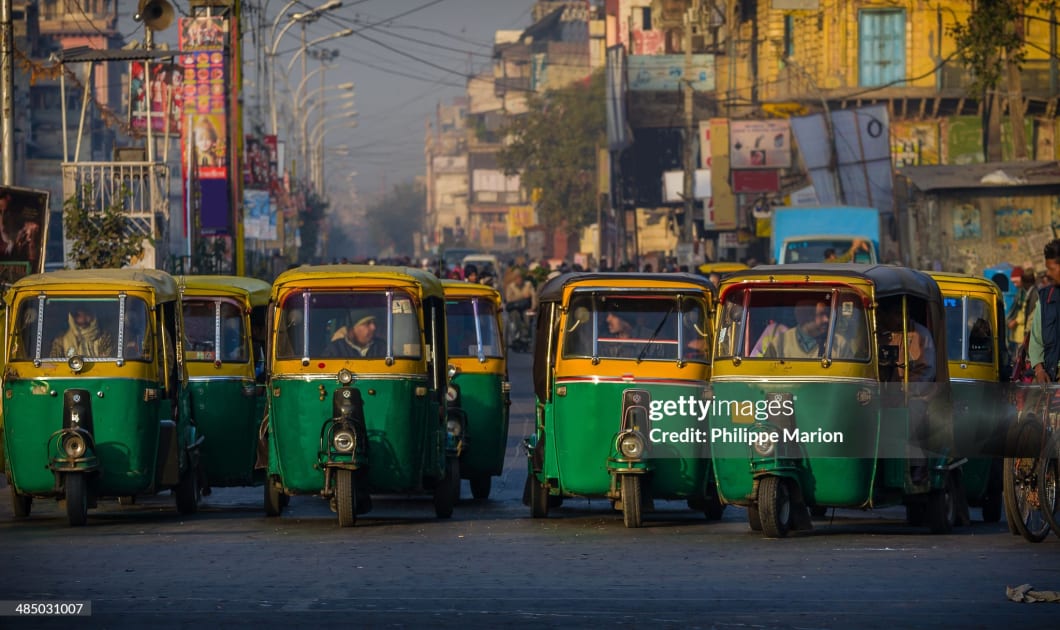
Semiotics, Colour: Not a Fixed Universal Code - But Most Tuk-tuks Still Come in Green and Yellow
While colour may not have a fixed, universal code, three-wheelers (tuk-tuks) still come in predominantly green and yellow wherever they ply the roads, i.e., almost universally. I turn to two studies with different emphasis but similar future research directions - for answers or more questions...
Semiotics and the Colour of “Strategic” Marketing
While my search reveals that there is no single “colour equivalent” of semiotics, it also tells me that colour itself is a semiotic mode used to convey meaning. Semiotics is the study of signs and symbols and their use and interpretation, and colour acts as a powerful signifier whose meanings are deeply tied to cultural context, emotion, and context. The meaning of a specific colour is not universal and can vary widely - depending on culture and context; emotion and psychology; and iconic, indexical and symbolic signs.
Culture and Context: In many European countries, black is the colour for mourning, while in East Asia, white is used for funerals. In China, red is associated with luck, but in North America, it can symbolize anger or passion.
Emotion and Psychology: Red stimulates the physical senses and draws attention, often used in marketing to raise energy levels. Blue is often seen as calming and can symbolize trust and security (hence its use by banks), but it also means sadness ("feeling blue") in Western cultures.
Iconic, Indexical, and Symbolic Signs: Colours function in different ways within semiotics:
Iconic signs: The colour is used because it physically resembles the object it represents (e.g., yellow packaging for lemon-flavored products).
Indexical signs: The colour has a direct, physical connection to a concept (e.g., green as an index of naturalness or eco-friendliness).
Symbolic signs: The relationship between the colour and its meaning is arbitrary and conventional, agreed upon by a social group (e.g., specific colours on traffic lights or different coloured milk cartons).
Ultimately, the ‘grammar of colour’ is a complex system of rules and associations that are continually shaped and re-shaped by social and cultural forces, not a fixed, universal code.
The Colour of Tuk Tuks: Why These Bright Rides Shape How We Feel About Cities
If you’ve ever travelled through cities in Asia, Africa, or parts of Europe, you’ll recognise them instantly — tuk tuks painted in bold yellows, energetic greens, fiery reds, and electric blues. At first glance, these colours feel playful and chaotic. But in reality, the colours of tuk tuks are doing far more than decorating a vehicle; they are communicating, influencing emotions, and shaping how we experience urban spaces.
Research into colour psychology tells us something fascinating: people form impressions extremely quickly when encountering products, environments, or even people. Studies suggest that within the first 90 seconds, up to 90% of an individual’s judgment can be influenced by colour alone. This explains why tuk tuks rarely come in dull, invisible shades. Their bright tones are not accidental — they are powerful visual tools that attract attention, generate excitement, and create identity.
Colour as a Silent Language on the Streets
Tuk tuks operate within dense, noisy, visually crowded environments. In such spaces, colour becomes a silent language. Bright yellows and oranges often project friendliness and warmth, suggesting approachability and energy. Greens can create a sense of calm and balance, while reds inject urgency and movement into traffic-heavy streets.
For drivers and operators, colour becomes a marketing strategy — even if unconsciously. A brightly coloured tuk tuk stands out in busy transport hubs, draws in customers faster, and feels more inviting. These colours don’t just catch the eye; they can subtly influence mood, reduce the perceived stress of travel, and even make waiting times feel shorter.
Tuk Tuks and the Rise of “New Colours” in Urban Life
In recent years, cities around the world have moved beyond traditional, earthy colour palettes. This shift has been described by urban colour researchers as the emergence of “new colours” — highly saturated, expressive shades that break away from local material traditions. Tuk tuks perfectly represent this evolution.
Once limited by the natural tones of available paint or materials, tuk tuk designs today showcase global influences — neon hues, metallic finishes, graphic decals, and experimental colour combinations. These moving artworks reflect a globalised urban culture, where colour is no longer tied only to tradition, but to identity, expression, and modernity.
Colours as Social Messages on Wheels
From a social semiotics perspective, colour is not just visual — it is communicative. Tuk tuks become mobile messages. A pink tuk tuk may communicate fun and youthfulness; a black and gold one might suggest luxury or premium service; a green eco-themed tuk tuk might symbolise sustainability.
Unlike traditional symbols with fixed meanings, colour meanings evolve with time and culture. What once symbolised danger may now represent boldness or confidence. The colours on tuk tuks are constantly reshaped by social trends, drivers’ personal identities, tourism culture, and city branding efforts. In this sense, tuk tuks are not just transport vehicles — they are social statements on wheels.
Why This Matters Beyond Aesthetics
The colours of tuk tuks are not random. They influence:
How safe or exciting a ride feels.
How long a wait seems.
Whether a traveller feels calm or overwhelmed.
Whether a service appears trustworthy or premium.
For city planners, designers, and transport operators, understanding this is crucial. Colour is not decoration — it is function, communication, and psychology combined.

The Bigger Picture: Colour, Culture, and the Future of Tuk Tuk Design
While social semiotics helps us understand how colours communicate, it doesn’t fully explain why certain colours appear in specific places. Geography, culture, climate, and function all play a role. A tuk tuk in Bangkok might embrace bright tropical tones, while one in Southern Europe might reflect coastal blues and whites.
What is clear is this: tuk tuks are not just navigating streets — they are navigating meaning. Their colours tell stories of globalization, identity, emotion, and urban evolution. For designers, city planners, and transport innovators, the message is simple but powerful: Colour is not optional. It is strategy. It is communication. It is experience. And on the streets of the world, few vehicles tell that story more vividly than the brightly coloured tuk tuk.
Reading Selection
M.A.K. Halliday (1978) Language as social semiotic: the social interpretation of language and meaning. London: Edward Arnold., https://lccn.loc.gov/79304646
Singh S (2006), Impact of color on marketing. Management Decision, 44(6), 783–789. https://doi.org/10.1108/00251740610673332
Yu, B. (2023). Understanding new colors in urban environments: Deciphering colors as semiotic resources. Color Research & Application, 48(5), 567-577. https://doi.org/10.1002/col.22871
Madichie, N. O. (2025a) Transport mobility in Ghana, India, and Nigeria [GIN Therapy Part 2]. Tekedia, November 23, https://www.tekedia.com/transport-mobility-in-ghana-india-and-nigeria-gin-therapy-part-2/
Madichie, N. O. (2025b) The Three Musketeers: Emerging Electric Mobility Solutions in Nigeria. Tekedia, October 1, https://www.tekedia.com/the-three-musketeers-emerging-electric-mobility-solutions-in-nigeria/
Madichie, N. O., & Nkamnebe, A. D. (2025) Africa’s Indigenous Automotive Innovation: A Focus on Innoson Vehicle Manufacturing and the Future of Electric Vehicle Marketing, Journal of Sustainable Marketing, 1-16 https://doi.org/10.51300/JSM-2025-151
Tags
Prof Nnamdi O. Madichie
Full Professor of Marketing
Contributor at Woxsen University School of Business