SIX-STEP PROCESS FOR AN ORGANIZATION TO MANAGE CORPORATE GOVERNANCE
Six-step process for an organization to manage corporate governance, business ethics, and social responsibility effectively by utilizing a stakeholder framework. The core idea is to integrate stakeholder feedback into organizational strategy.
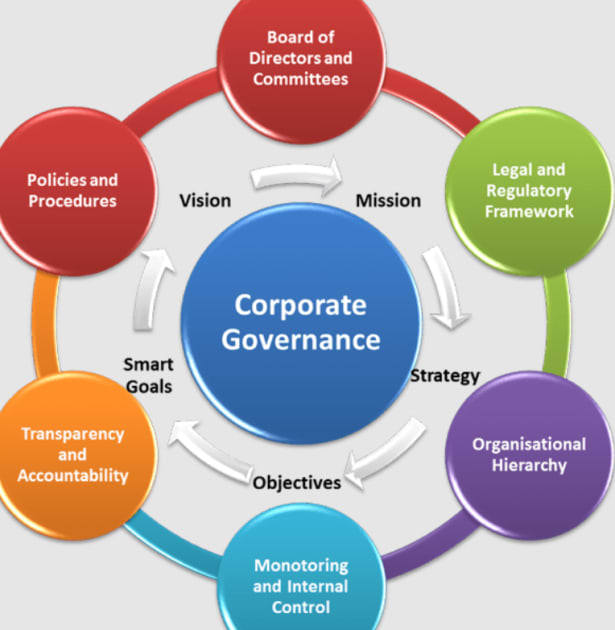
SIX-STEP PROCESS FOR AN ORGANIZATION TO MANAGE CORPORATE GOVERNANCE
By Dr. Vishakha Jha, Assistant Professor from SOB
Six-step process for an organization to manage corporate governance, business ethics, and social responsibility effectively by utilizing a stakeholder framework. The core idea is to integrate stakeholder feedback into organizational strategy.
Step 1: Assessing the Corporate Culture: This step involves identifying the organization's mission, values, and norms to ensure that any social responsibility initiatives align with the existing corporate culture. This helps identify which stakeholder groups and issues are considered most important by the organization. An example provided is Green Mountain Coffee, which is known for its fair-trade practices and support for coffee growers.
Step 2: Identifying Stakeholder Groups: This stage focuses on recognizing the needs, wants, and desires of stakeholders such as consumer groups, regulators, and the media. The text highlights that stakeholders have power because they can withhold resources, and their influence is greatest when their own survival is not dependent on the organization's success. An example is the potential for consumers to boycott a brand like Nike.
Step 3: Identifying Stakeholder Issues: This step involves understanding the main concerns of the most powerful and legitimate stakeholders identified in the previous steps. The urgency of an issue is determined by the level of stakeholder power and legitimacy. The example of rising obesity and healthcare costs in the United States illustrates how stakeholder concerns can push for government action.
Step 4: Assessing Organizational Commitment to Social Responsibility: This stage synthesizes the information from the first three steps to create a specific definition of social responsibility for the organization. This definition is then used to evaluate current practices and select concrete initiatives. Starbucks is given as an example of a company that has formalized its social responsibility initiatives through official documents and a dedicated website.
Step 5: Identifying Resources and Determining Urgency: This step is about prioritizing stakeholders and issues to allocate resources effectively. Two criteria are used: the required financial and organizational investment, and the urgency of the issue. Urgency is high when an issue is significant and stakeholder pressure is expected. Wal-Mart's response to legislative pressure regarding employee health care benefits is provided as an example.
Step 6: Gaining Stakeholder Feedback: The final step is to collect feedback from stakeholders to assess the firm's practices and contributions. This can be done through surveys, monitoring stakeholder-generated media (like blogs and websites), and formal research methods (like focus groups and observation). The text uses the example of Consumer Watchdog, a group that uses the web to publicize its messages and praised Costco for its consumer-friendly fuel pricing policy.
