When a Cash Crop Collapses: Learning about the Crisis experienced by Banana Farmers in Andhra Pradesh.
This case study highlights the crisis of banana farmers in Andhra Pradesh due to cyclone damage, market price crashes, poor post-harvest infrastructure, and delayed support. It underscores the need for immediate relief and long-term, climate-resilient solutions.
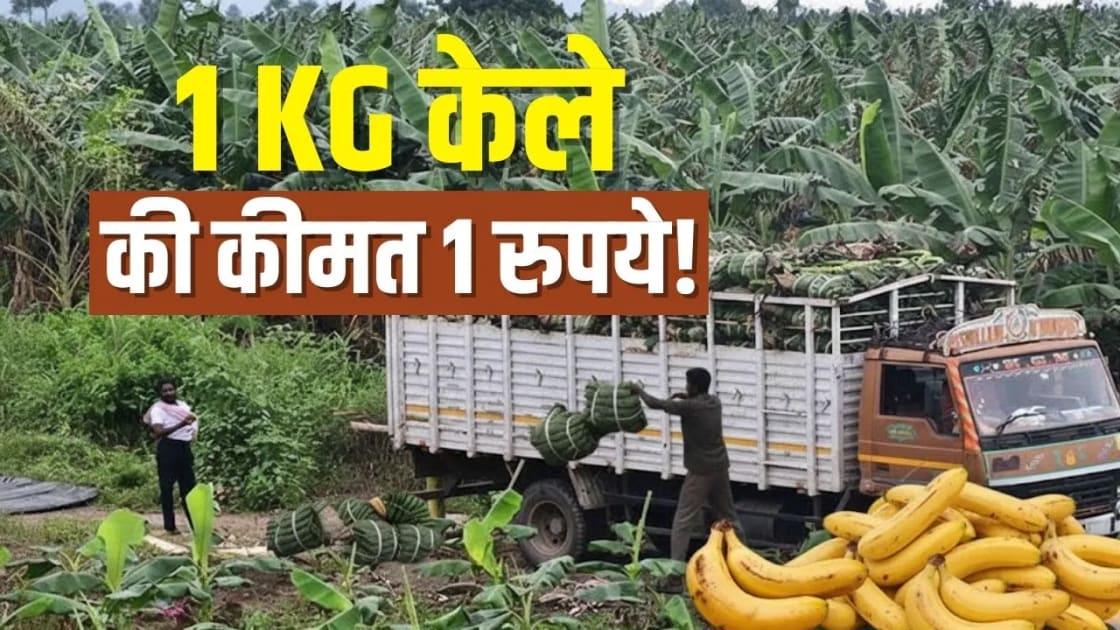

The Recent news has made one thing clear: Andhra’s banana crisis is not just a weather story — it is a market, logistics, and governance failure in real time. Immediate relief (aggregation, transport, processing, and cash support) can stop the bleeding; medium-term investments (cold chain, FPOs, processing) will bring back incomes; longer-term agronomic shifts (resilient practices and varieties) will reduce the risk of repeat devastation. Whether this season turns out to be only a shock or the impetus for building a more resilient banana sector is determined by practical steps being implemented by district officials, extension services, farmer groups, and market actors through coordinated actions. Newspapers of Andhra Pradesh have been reporting striking headlines in the last few weeks about the aggravating crisis of banana farmers. Previously regarded as one of the most reliable crop crops in the state, bananas have turned to be an agonist to thousands of growers in Rayalaseema, Coastal Andhra and in Godavari region. Caused by a composition of natural disasters, market crashes and policy loopholes, farmers are now in a position in which they are not economically viable to continue farming.
The extreme destruction of crops by new cyclonic winds and unseasonal rains has been one of the most publicized problems. Banana plantations, thousands of hectares of them, were uprooted, the bunch was broken or bruised and the fields are still flooded. Farmers who had spent a lot of money in the tissue-culture saplings, fertilizers, irrigation and labour are now left with plantations that cannot recuperate. The damage in various districts is so high to the extent that farmers are estimating the losses in lakh of rupee per acre. To most families, this does not only imply that they have lost a single crop cycle, but they have also to pay back loans that they had borrowed on the hope of a bountiful harvest.
But the crisis is not based upon weather destruction only. Prices in the market have plummeted drastically and this has been the order of the day in the media coverage. In localities where the crop was able to survive, farmers cannot get a good price because of overproduction, lack of market connections, and the lack of an organized procuring system. The prices of bananas have fallen so low in most mandis that the growers are not even willing to harvest the crop. Movement of the produce to the bigger markets is costly and traders take advantage of the fact by withholding payments or paying very low prices. This leaves farmers in a precarious situation where they have to bear the expensive cost of harvesting their products and the low revenue that is insufficient to meet even their labour costs.
The third problem that has been raised by the press is insufficient infrastructure after harvest. Bananas are very perishable and lack of proper grading centres, ripening chambers, cold storage units and processing facilities, farmers are left with no option but to sell in distress to the local traders. Newspapers have on several occasions indicated that there are no village level collection points and therefore small and marginal farmers, compelled by this, have to rely on middlemen. The outcome is a diluted value chain which provides low returns to the farmers even though they got high retail prices in urban areas.
The newspapers have also highlighted the delayed government support such as the pending input subsidies, slow payout of the crop insurance claims and inadequate payout of cyclone related losses. The argument by many farmer associations is that with the government proclaiming relief packages, the government is slow and bureaucratic in implementing the relief package on the field. This policy-practice gap has increased the fiscal burden on banana farmers, particularly those who have no other source of income other than banana farming.
Simultaneously, the media has depicted some positive details. The natural farming and some resilient planting methods are reported to have assisted some of the fields to endure heavy winds, as compared to the traditional plantations. This implies that the climate-resilient agriculture, including windbreaks, enhanced staking and cultivating the soil on the basis of health, may be significant to minimize the future destruction. But scaling of these methods must be done with awareness, training and early government and agricultural institution backing.
The banana farmer crisis in Andhra Pradesh is not simply an agricultural problem, but a socio-economic problem, which has impacted on rural livelihoods, food supply systems, and local economies. Combining the immediate relief with long-term structural reforms is what farmers require today as the newspaper reports all demonstrate. Short-term measures like swift transportation to the bigger markets, short-term procurement centres, equitable pricing systems, and quick pay can be used to overcome the existing shock by the farmers. Long-term investments in cold storage, farmer-producer organisations (FPOs), processing facilities, and climate-sensitive agricultural systems will be very important in stabilising banana production in the state.
At this stage, the crisis is a wake-up call to the fact that agricultural planning must not be limited to crop production. It should involve market preparedness, climate preparation, and systems of support to the farmers. It is only then that the banana farmers of Andhra Pradesh can be assured to grow one crop that has been able to nourish generations- and make sure that such disasters are not repeated with every change in the weather or even in the market cycle.
Tags
DR.GUDIMALLAM PURUSHOTHAMA CHARI
School of Business
Contributor at Woxsen University School of Business