Environmental health hazards attributed to deteriorated indoor air quality caused by inferior construction practices
Loading...
Review Paperreview
Abstract
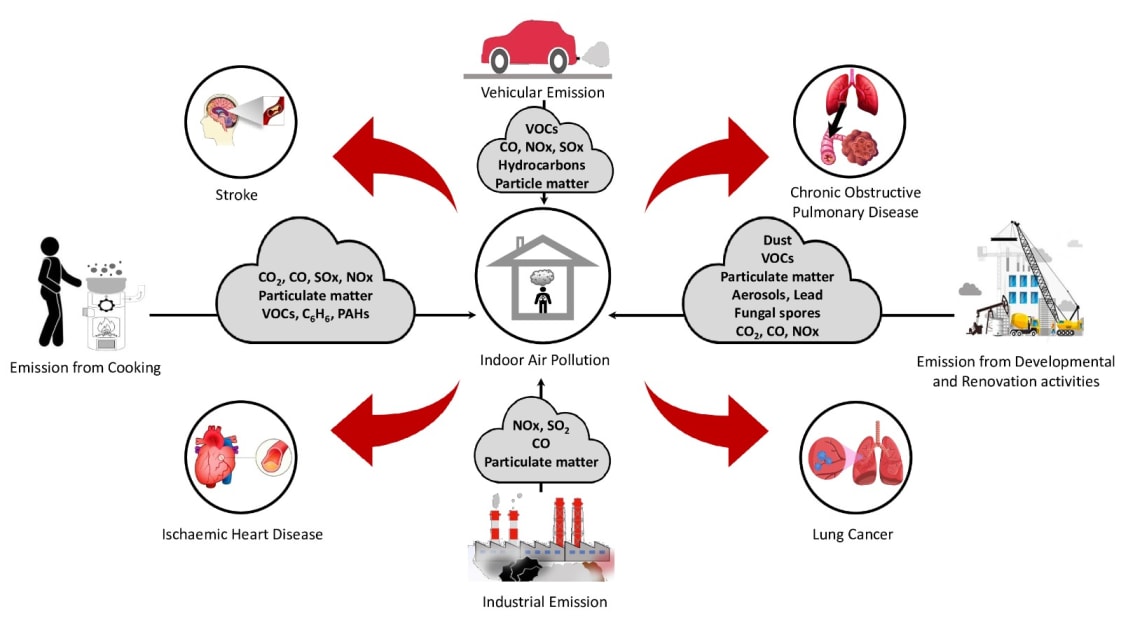
Accounting for nearly 5% of the global gross domestic product, the construction industry significantly contributes to environmental pollution, emitting a broad range of hazardous pollutants, including particulate matter (PM10, PM2.5), carbon monoxide (CO), nitrogen oxides (NOx), volatile organic compounds (VOCs), benzene and polycyclic aromatic hydrocarbons (PAHs). Individuals spend approximately 90% of their time indoors, where the air quality is heavily influenced by construction and demolition (C&D) activities that are carried out within or adjacent to residences. Despite regulatory interventions in the early 21st century emphasizing the importance of indoor air quality (IAQ), the contribution of C&D activities to indoor pollution remains largely underexplored, particularly to seasonal variations, extended renovation periods, and the release of case-specific pollutants. This review bridges knowledge gaps by examining the correlation between construction activities, pollutant emissions, health risks, and the efficacy of existing regulations. Key investigations include the impact of infrastructural inefficiencies and improper ventilation on IAQ, seasonal pollutant variations, and the disproportionate exposure risks faced by vulnerable populations, such as women and workers. The literature suggests that prolonged exposure prompts sick-building syndrome and ailments such as compromised immunity, bronchial allergy, asthma, and lung cancer. A survey-based data collection and analysis were conducted to gather and refine residents' practical insights across India, contributing to the development of an IAQ index. This tailored index, ranging from 22 to 100, is designed for indoor environments, incorporating building-specific and occupancy-related factors.
Publication Information
Keywords
indoor air qualityhealth and safetyc&d industry
Indexing & Metrics
✓
Scopus
✓
Web of Science
Q1
Quartile
3.5
Impact Factor
0
Citations
Research Details
D