Revisiting "The Other Half of Gender" in the Light of International Men's Day and SDG5
As we just witnessed yet another International Men’s Day [November 19] one question comes to mind — Is it time to revisit the “gender-aware framework” propounded by leading entrepreneurship scholars? Perhaps a revised framework that is more inclusive – drawing from “Refiguring the Subaltern”?
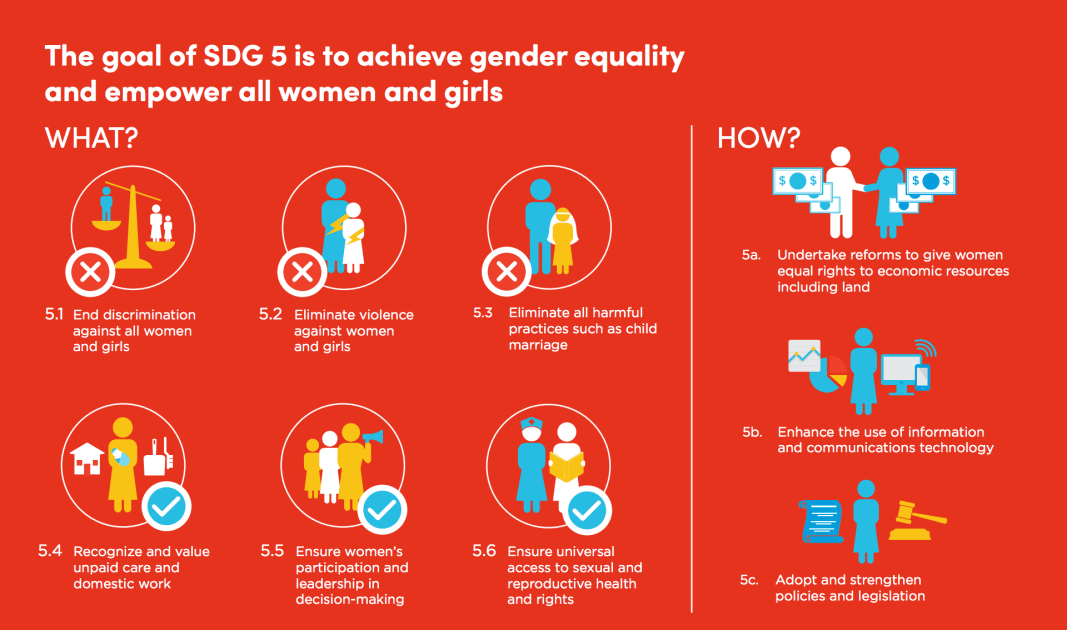
As we just witnessed yet another International Men’s Day [November 19] one question comes to mind — Is it time to revisit the “gender-aware framework” propounded by leading entrepreneurship scholars? Perhaps a revised framework that is more inclusive – drawing from “Refiguring the Subaltern,” might well be a good proposition as we reflect on progress in achieving goal 5 of the UN sustainable development goals (SDGs).
With over 2.5K Google Scholar citations of the seminal work by Candida Brush, Anne de Bruin and Frederik Welter, “A gender‐aware framework for women’s entrepreneurship,” we are still witnessing a skew on one half of gender. Perhaps it would be a good time to have a more holistic, more inclusive framework that leaves no one behind, especially the “subaltern” other half of gender.
While the Sustainable Development Goal 5 (SDG 5 Gender Equality) may rightly focus on women and girls, reflecting long-standing global disparities, the exclusive emphasis on women creates a narrow interpretation of “gender equality” that does not fully account for the relational nature of gender dynamics. Men are largely absent as explicit stakeholders – appearing only as comparators or, implicitly, as perpetrators – rather than as partners whose engagement is essential to achieving meaningful change.
This omission limits the goal’s ability to encourage broader societal transformation.
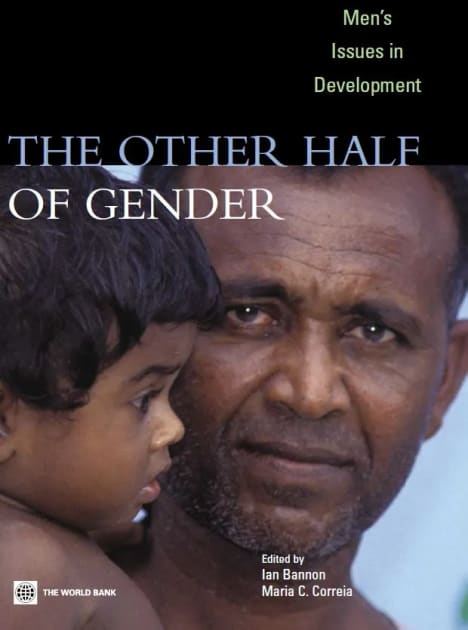
I made a bold attempt two years ago to review an interesting collection of contributions from the African lens about two years ago — of a World Bank Publication entitled “The Other Half of Gender.” November 19 just brought the thought back and prompted putting this challenge forward as a research question or area for research interrogation.
Gender norms that disadvantage women also influence men’s behaviour, participation in caregiving, and attitudes toward equality. Without indicators that capture men’s roles, contributions, or shifts in gender norms, opportunities for more holistic, gender-transformative policies are missed.
Furthermore, SDG5 does not seem to reflect the evolving understanding of gender beyond binary categories. While the focus on women remains vital, a more inclusive approach would, undoubtedly strengthen progress by recognising and measuring the roles all genders play in advancing real equality.
This calls for some research on inclusive gender studies.
Selected/ Abridged Reading:
Beloskar, V. D., Haldar, A., & Gupta, A. (2024). Gender equality and women’s empowerment: A bibliometric review of the literature on SDG 5 through the management lens. Journal of Business Research, 172, 114442., https://doi.org/10.1016/j.jbusres.2023.114442
Brush CG, de Bruin A, Welter F (2009) A gender‐aware framework for women's entrepreneurship. International Journal of Gender and Entrepreneurship, 1(1), 8–24, https://doi.org/10.1108/17566260910942318
Davidson, A. (2008). The Uses and Abuses of Gramsci. Thesis Eleven, 95(1), 68-94. https://doi.org/10.1177/0725513608095802
Leek, C. (2019) Understanding Feminist Resistance to “Men-Streaming”. Global Social Welfare. 6, 219–229. https://doi.org/10.1007/s40609-019-00139-2
Roy, C.K. and Xiaoling, H. (2022), Achieving SDG 5, gender equality and empower all women and girls, in developing countries: how aid for trade can help?, International Journal of Social Economics, 49(6), 930-959. https://doi.org/10.1108/IJSE-12-2020-0813
Smith, K. (2010). Gramsci at the margins: subjectivity and subalternity in a theory of hegemony. International Gramsci Journal, 1(2), 39-50., https://doi.org/10.14276/igj.v1i2.3985
Thomas, P. D. (2018). Refiguring the Subaltern. Political Theory, 46(6), 861-884. https://doi.org/10.1177/0090591718762720