African Barbershops – In the Cut or Cutting Edge?
Independently owned by one or more owners, barbershops tend to be excluded from public funding – for reasons ranging from their being deemed high-risk borrowers operating in the informal sector. This study provides some insight into the warranted change in narrative and call for more research.
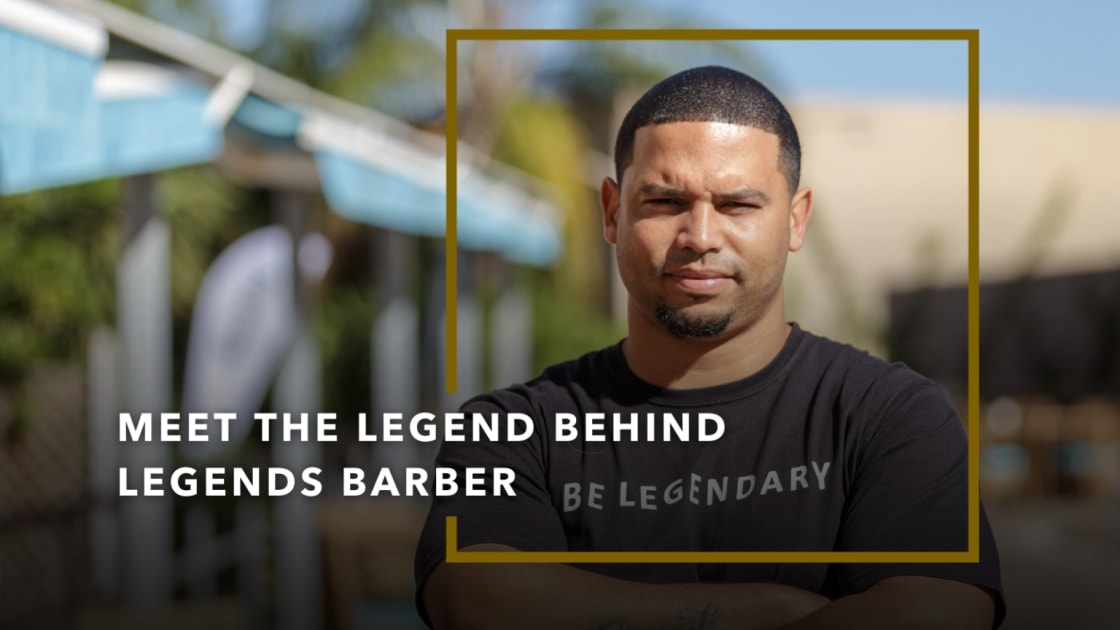
MEET THE LEGEND BEHIND LEGENDS BARBERSHOP – The Insider SA
There have been studies on the barbershop cutting across countries such as the US, South Africa and the UK. In the first of these, Kristen Barber once wrote about the Barbershop as a trade facing extinction in the face of a decline in the Black community (The Conversation, August 8, 2016). Taking the perspective of Black Barbershops in the US, the article talks of the barbershop as a dirty little place with a dusty TV, linoleum floor and stack of auto magazines. Entitled, “Goodbye to the barbershop?,” the author poses two mindboggling questions, which warrant further enquiry: Is the decline of the corner barbershop another indicator that male friendships and community ties are eroding? Or could it simply mean that concepts of masculinity are shifting?
In a second article by Rosabelle Boswell entitled “The heritage of hair: stories of resilience and creativity” (The Conversation, September 5, 2016) highlights immigration and globalisation as diversifying hair heritages citing how Moroccan barbers have imported male nose and ear waxing to South Africa. The title is also instructive as it talks about resilience and creativity from an African perspective. Hair has long been modified for aesthetic and other ends. But skewed power structures have meant that women, particularly women of colour, have borne the brunt of stereotyping and prejudice.
The third article taken from the UK perspective, proposed the adoption of electronic booking systems for Barbershops in East London where the main preoccupation of the barber as someone that is too busy to answer his phone calls or respond to questionnaires when customers are queuing up to fulfil their grooming rituals was highlighted (see Omesuh, 2019; Madichie and Munro, 2019). That study points out the absence of receptionists at barbershops considering the overheads associated with employing the services of a full-time receptionist. It also proposed the need for an electronic booking system to barbershops in the East London area in order to enable them fulfil orders that might otherwise be missed, by taking advance bookings in real time.
The latter study complements the findings of a BBC article (Shaw, 2019), which highlights a new force in the Black Barbershop in London. The excerpts and interpretations of these are discussed in the next few paragraphs, “for many black British men, barber shops are a place to hang out, chat and meet friends. But for others they waste too much time, which is why two young men have come up with a new approach – a barbershop on wheels that you book via an app.” Darren Tenkorang, 24, co-founder of Trim-It points out that “My service is like Deliveroo, or Uber Eats, but instead of delivering food, we deliver haircuts…” He currently has two vans buzzing around south London and another in the north-west of the city. Darren is confident he’s on to something. According to him: “Male grooming is a super-important part of my culture… My generation really values convenience above all else, you see.” He grew up in Brixton, south London, where his mother worked as a cleaner and his father as a security guard – they had arrived from Ghana in the 1980s and had dreams of him becoming a banker, lawyer or accountant. University was always part of the plan for him, but when the time came, he wasn’t sure which one would feel right. It was a barber shop that helped him decide. His “Trim-It app” won the competition (£10,000 in prize), and he was named the University of Sussex’s Student Entrepreneur of the Year. To get his company up and running, he recruited a rival from the competition, a fellow student called Nana Darko, whose confident air had impressed him. He was like him, a young black man from South London with dreams of business success. Together they pounded the streets of Brighton, signing up barbers to their new app – all barbers, not just the Afro-Caribbean ones. Just as Darren and Nana had intended, the kind of people making the bookings were mostly young, black millennials.
Technology, SME and the 21st Century
A study based on an examination of the influence of funding on the technology acquisition by small, mostly immigrant businesses in the Mangaung Metropolitan Municipality (3M) in the Free State province of South Africa reveals that that this was an under studied group with contributions to the economy at large (see Madichie et al., 2019). Drawing upon a sample of 150 Afro hair salons in the 3M in the Free State Province of South Africa the study finds that the prime sources of public funding for hair salon businesses are the National Youth Development Agency and the Small Enterprise Development Agency. These findings also demonstrate that public funding has a negative and significant impact on technology acquisition, perhaps suggesting the complexity of debt financing and the exorbitant interest rates charged on principals borrowed by foreign nationals. The study recommended the judicious acquisition of inexpensive technologies (e.g. social media platforms) and cautionary utilisation of complex technologies and personal savings before resorting to external borrowing.
Afro hair salons are distinct entities independently owned by one or more owners, and tend to be excluded from public funding – for reasons ranging from their (i) high-risk borrowers due to the diverse nationalities of their owner/managers, (ii) lack of collateral, which is already well-known (iii) lack of an established borrowing history, and (iv) the high volatility of income, which makes loan repayments uncertain and risky.
Besides the acute skills shortages, most hair salons in South Africa lack the knowledge required effective technology deployment and, therefore, limited use of cosmetology technology including mobile applications (apps). However, there is limited research on the funding from public agencies devoted to acquisition and effective deployment of new technologies in this rapidly increasing technologically dependent sub-sector of the economy and a major employer for marginalised youth.
So where do we go from here?
There is no better time to showcase a neglected sector than in the Youth Month in South Africa. It is no longer news that technology has permeated every sector of the economy from financial services to fashion, from travel to smart chat bots. Even grooming rituals such as a visit to the barbers or non-traditional medicine like acupuncture delivery have been and are still being impacted. Such innovations require a complimentary touch such as entrepreneurship especially amongst the youth population. Indeed one study published about a decade ago highlights the relationship between innovation and entrepreneurship and the complexities surrounding this interaction as follows, “...one can have invention without entrepreneurship and one can have entrepreneurship without invention. Only when both processes interact does innovation result” (see Hindle, 2009).
In view of the negative relationships between access to public funding, the attractiveness of interest rates, public debt and equity financing and the acquisition of technology, four strategies may need further reflection.
First, the study calls for the focus of public funding for hair salons to shift from improved accessibility of public funding to increasing the period for loan repayments. This should be well targeted to include marginalised groups such as the youth and immigrant populations who dominate this trade.
Second, there are organisational factors – economic and technology factors – impacting or impeding successful technology acquisition and deployment. Whilst some business owner/managers may have the technological competence, their staff may be ill-equipped thereby requiring technology skills training.
Third, the combination of technological skills shortages and financial constraints account for the limited use of technology in the barbershop and especially with the recent interest of tech savvy millennials in the sub-sector.
Fourth, and finally, a successful technology adoption in an organisation also requires an effective support system and organisational tendency to invest in new technologies, as well as provide required training to upgrade users’ skills.
Further Reading
Barber, K. (2016) Goodbye to the barbershop? The Conversation, August 8. https://theconversation.com/goodbye-to-the-barbershop-63168 [Accessed 13 June 2019].
Boswell, R. (2016) The heritage of hair: stories of resilience and creativity. The Conversation, September 5. Retrieved from: https://theconversation.com/the-heritage-of-hair-stories-of-resilience-and-creativity-64786 [Accessed 13 June 2019].
Hindle, K.G. (2009). The relationship between innovation and entrepreneurship: easy definition, hard policy. Australian Graduate School of Entrepreneurship (AGSE) Research Report Series, Vol. 6, pp. 75-91. Melbourne: Swinburne University of Technology. ISSN 1448-7128. http://dro.deakin.edu.au/view/DU:30022243
Madichie, N. O. (2020) Entrepreneurship & Youth Employment in Africa: Barbershop Narratives. Paper presented at the International Council for Small Business (ICSB) Conference (Virtual), July 25, https://www.researchgate.net/publication/343212299_Entrepreneurship_Youth_Employment_in_Africa_Barbershop_Narratives
Madichie, N., Mpiti, N., & Rambe, P. (2019) Impact assessment of funding on technology acquisition by small businesses: A case study of hair salons in a South African municipality, Journal of Enterprising Communities: People and Places in the Global Economy, https://doi.org/10. 1108/JEC-09-2018-0058
Madichie, N. O., & Munro, C. (2019) Drivers Under the Influence (DUI) of Digital, Innovation and Everything in-between. Bloomsbury Institute Working Paper Series, 4(1), 4-11., https://www.researchgate.net/profile/Nnamdi-Madichie-2/publication/336130038_Bloomsbury_Institute_Working_Paper_Series_Volume_4_Issue_1/
Omesuh, B. (2019) Electronic Booking Systems: Exploring Black Barbershops in East London. Bloomsbury Institute Working Paper Series, 4(1), 23-35.
Shaw, D. (2019) Mobile barbering: It’s like Uber, but for haircuts. BBC Stories, 29 March. Retrieved from: https://www.bbc.co.uk/news/stories-47711610