Doomscrolling's 2025 Viral Internet Marketing Campaign
See how negativity bias powers doomscrolling and how marketers use it to craft viral, hope-driven campaigns.
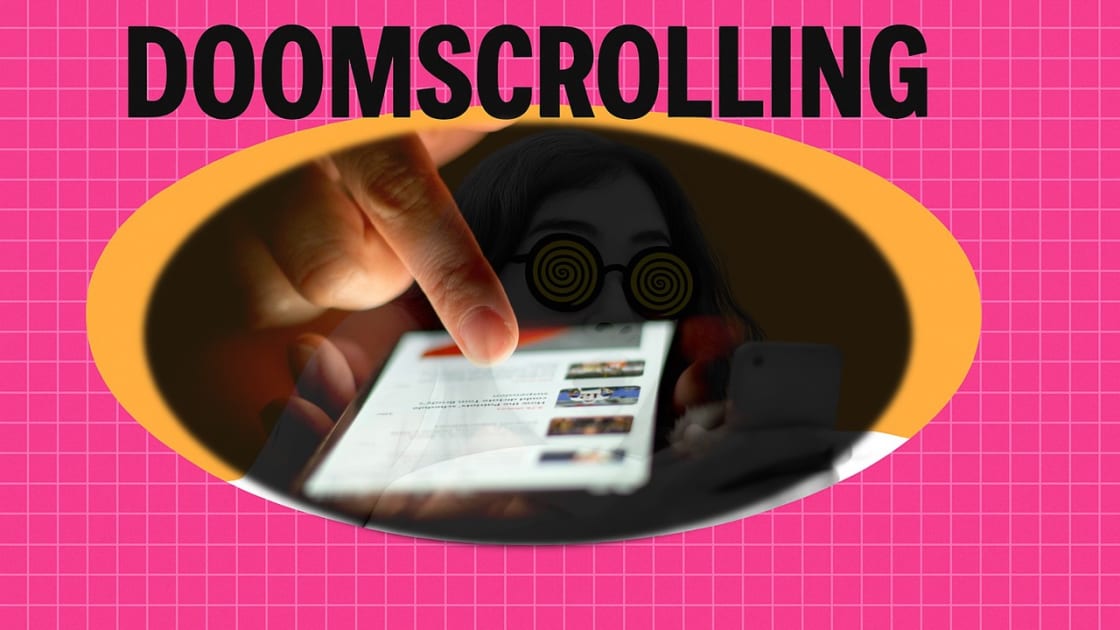
Doomscrolling's 2025 viral internet marketing campaign
It's almost midnight. You had planned to be asleep by 10 so you could get a full eight hours of rest, but here you are again, telling yourself, “Just one more scroll.” As soon as an hour has passed, you are buried in stories regarding wars, job losses, disasters, and scandals. A cycle like this is called doomscrolling.
The habit of constantly consuming negative news on social media—whether it's about crises, tragedies, or global uncertainty—is described here. The word “doomscrolling” first became popular in early 2020, during the COVID-19 pandemic, when people were stuck at home and surrounded by a flood of mostly negative updates online. In times of crisis, information spreads quickly, but much of it focuses on fear, loss, and uncertainty.
You should know that doomscrolling won't disappear anytime soon. Rather than seeing it only as a bad habit, marketers are now wondering, could this very behavior be the spark behind a viral campaign? This habit offers marketers an intriguing opportunity.
A campaign that recognizes people's fears, worries, or frustrations and offers a clear solution is more likely to connect with them if they are naturally drawn to negative news. Psychologists explain this with the idea of negativity bias, which is simply our brain’s tendency to notice threats more than positive events. Put simply, one alarming headline can grab our attention faster than ten uplifting ones.
Ways brands leverage doomscrolling
Health organizations took advantage of this trend during the pandemic with public health campaigns that addressed phrases like, "If you don't wear a mask, you could put others at risk." Because they targeted people's preexisting anxieties, these marketing campaigns gained momentum quickly.
Several financial services, such as investment firms and insurance businesses, employ comparable strategies. Commercials for this product often include warning statements like "Protect your family before it's too late" or "What happens if something unexpected happens tomorrow?" to draw attention to the issues that could arise. They urge buyers to act by displaying to them the worst-case scenarios.
People often make impulsive decisions that they later regret due to a sense of urgency. These instances demonstrate that doomscrolling extends beyond simply absorbing negative information. It can be redirected with the right approach, which can lead people to make decisions that take steps to protect themselves or even support a cause.
Although Fearful, Hope Wins

One of the issues with this is that anxiety alone does not inspire trust. People may be drawn to negative conversations, but they won't stay interested for very long. When companies transform that moment of anxiety into hope, the genuine magic happens.
Think of it as a two-way approach: Start with Fear or Worry; Use a headline or image that reflects what people are already anxious about. Finally, offer a solution and hope. Then, quickly move on to demonstrating how your idea, service, or product addresses that issue.
For instance, consider cybersecurity.
There might be a headline on an advertisement that says, "Every day, hackers break into thousands of small businesses." That's enough to make you stop scrolling. Then the advertisement shifts to say, "Secure your business in just 10 minutes with our firewall."
Fear got the attention, but hope and action earned trust.
What causes negative stories to travel faster?
It's no secret that social media platforms thrive on engagement, and unfortunately, negative news is more likely to attract clicks, comments, and shares than positive news. The higher a post's engagement rate, the more its algorithm will try to include it in everyone's news feed. It's for this reason that campaigns that use urgency, conflict, or shock value tend to spread faster. Generally speaking, the doomscrolling action allows a message to spread faster and farther.
However, fear-driven marketing could be a slippery path. People will recognize if it feels deceptive or fraudulent, and your business might lose trust rather than earn it.
The better approach is focusing on empathy.
A marketing campaign that says, "We know you're worried about X; here's how we can help," feels far more authentic than one that just adds to the fear. The difference between creating trust and crossing the line into fear-mongering is being honest, presenting actual solutions, and ending messages on a positive note.
While doomscrolling may appear to be nothing more than an unhealthy nighttime habit, it actually illustrates a significant truth: individuals pay close attention when they are anxious. For marketers, this presents both a challenge and an opportunity.
If you are able to convince people to pay attention by talking about their anxieties and then lead them to optimism and solutions, you won't only earn clicks; you will earn trust. So, marketers must focus on creating campaigns that are relevant, timely, and human.
So, the next time you find yourself scrolling at midnight, realize that people's same behavior could also spark your brand's next big idea.