Global Regulatory Perspectives on Decentralized Finance
Decentralized finance a transformational driver in modern finance by applying blockchain and smart contract to redefine novel financial service.
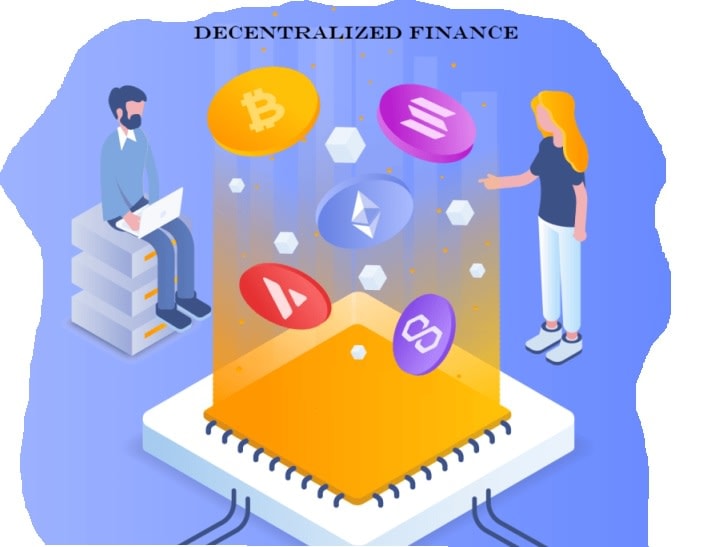
Decentralized Finance (DeFi) has evolved as a transformational driver in modern finance, employing blockchain technology and smart contracts to reshape the novel financial service while circumventing the involvement of conventional intermediaries (like banks and brokers). Where blockchain provides a protected, transparent, and Incorruptible framework eliminates the dependence on traditional intermediaries. Similarly, a smart contract is a self-operating code on blockchains, which facilitates the execution of automated, complex financial transactions with limited human involvement. Defi emerges as a leading player in the market and exhibits remarkable growth in the financial sector, especially the insurance industry. The market size of global Defi is calculated at US$26.94 billion in 2025. As a result of its widespread acceptance, the growth is predicted to reach US$231.19 billion by 2030. Concerning region-wise wise North America captures the largest share in 2024 and holds the leading position in the defi market by generating the highest revenue. The reason behind such growth is the initial stage acceptance of a blockchain-driven, comprehensive technological foundation. Moreover, economic uncertainty, inflation, and volatile interest rates induced individuals to search for a decentralized tool for hedging and capital preservation. While country-wise, Australia is likely to demonstrate the highest growth between 2025 to 2030. In the same way, the Asia Pacific Defi market is also expected to indicate appreciable growth during the projected time frame. Nevertheless, the swift expansion drew the attention of governing authorities worldwide because of its decentralized structure of setup. This decentralized structure challenges the prevailing legal frameworks tailored for conventional financial institutions. Governing bodies raised concerns about the issue, like market instability, tax collection, disguising illegal funds, and consumer protection. Past Research revealed that approximately $10.5 billion financial setback was incurred due to hacking by a cybercriminal at the Defi platform in 2021. Wormhole is a Defi platform was suffered one of the most consequential system failures in 2022. It was among the top five cryptocurrency hacking cases in which an intruder took advantage of a security vulnerability to steal, in a single instance, around $325 million. The new regulation, Markets in Crypto Assets (MiCA), was implemented in June 2023 and is the European Union's comprehensive regime with goals ensuring uniformity in the crypto-asset market. However, In the US market there are several federal bodies such as internal revenue service(IRS), financial crimes enforcement(FinCEN), department of justice(DOJ), and commodity future trading commission(CFTC), and the security and exchange commission(SEC) invoved in to monitor the different facet of DeFi.Additionally, state level authority also exercise the jurisdiction in certain domain. SEC applied a Howey test which is used to examine whether the transaction meet the criteria as an “Investment contract” and thereby qualified as a security based on US Law. However, Hester M. Peirce argued that the test does not always suitable for digital asset because some crypto token don’t function as an investment product.