Inconvenient Truths - History, Identity, Marketing and Entrepreneurship Stories from Indians in South Africa
My qualitative research orientation and entrepreneurship research plans has necessitated setting the stage with this article to presents some Inconvenient truths on the subject based on storytelling. As Vahed & Desai point out "The Indian diaspora in South Africa is awash with storytelling."
A Review of “The Revenge of History: Indian Indenture and its Afterlife in South Africa”
Nnamdi O. Madichie, PhD, FCIM, FCMI
Woxsen University Hyderabad, India
Email: nnamdi.madichie@woxsen.edu.in
https://orcid.org/0000-0001-8400-5527

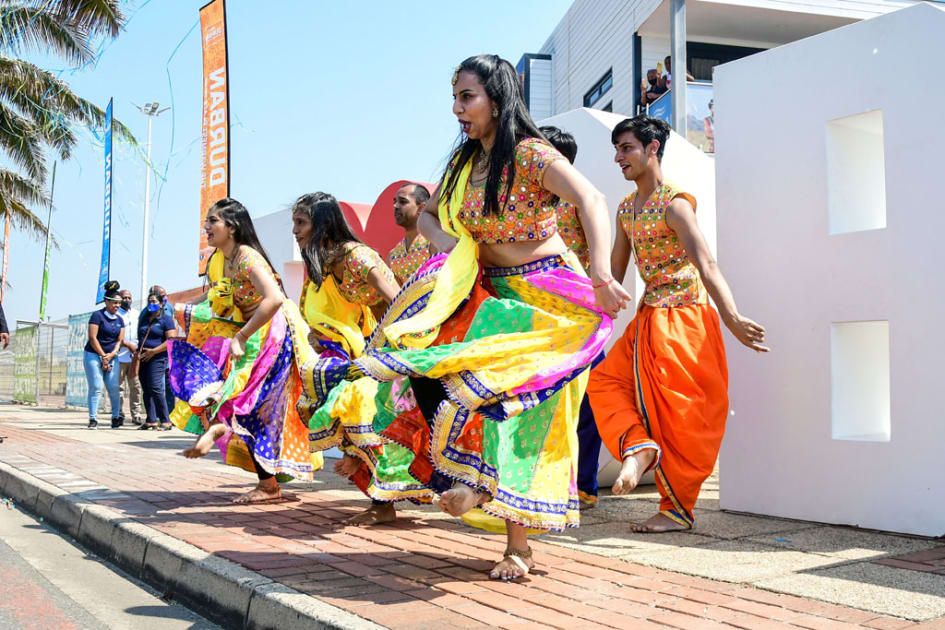
https://media.citizen.co.za/wp-content/uploads/2020/09/ED_248732.jpg
South African Indians are primarily descendants of indentured labourers from British India who arrived between the mid-19th and early 20th centuries to work on sugar plantations. Most of them live in Durban and the surrounding KwaZulu-Natal province, making it a major centre for people of Indian descent outside of India. While they initially faced restrictive policies, they eventually became accepted as citizens, playing significant roles in South Africa’s economy and the anti-apartheid movement – Anonymous.
As I commence my research on Entrepreneurship across two subcontinents, South Asia (especially India) and Sub-Saharan Africa (notable South Africa), I was opportune to uncover a rather interesting article, which aligns with my research orientation – i.e., narrative research – and its all other appellations in the qualitative research family. This article sets the scene for my own independent research drawing upon my observations and travel to both South Africa and now India.
Goolam Vahed and Ashwin Desai’s article “The Revenge of History: Indian Indenture and its Afterlife in South Africa” (2024) explores the legacies of indentured Indian labour in Natal (now KwaZulu-Natal) and how the lives of their descendants unfolded across generations. The authors examine how family and community histories – often self-published and grounded in oral narratives – have expanded the archive of indenture, complicating dominant historical accounts. These stories not only recover suppressed pasts but also demonstrate how descendants navigated exclusionary laws, built new forms of livelihood, and asserted identity in the face of apartheid.
From Indenture to Settlement
Between 1860 and 1911, more than 152,000 Indians arrived in Natal as indentured labourers. Although their contracts included return passages to India, many chose to remain. Over time, their descendants transitioned from plantation life to diverse livelihoods – small-scale farming, trading, education, and later professions. While formal records and elite political histories often underplayed these everyday struggles, oral histories and family accounts have illuminated how ordinary people created stability, opportunity, and community despite systemic racism.
Barriers and Agency
Indian South Africans faced entrenched discrimination through immigration controls, land restrictions, and business licence barriers. Yet within these constraints, families carved out spaces for advancement. Some acquired small plots of land, others invested in transport, shops, or schools. This blend of structural limitation and entrepreneurial agency shaped a unique trajectory for the community, creating both opportunity and friction with other racial groups.
Microhistories as Afterlife of Indenture
The authors argue that the “afterlife” of indenture is best understood through microhistories: detailed family stories that connect the initial migration with later generations. Such accounts reveal not only how people survived and advanced but also how the past “returns” to challenge dominant narratives – the “revenge” of history. In tracing these intimate trajectories, the article demonstrates how identity, belonging, and resistance were built in ways often overlooked by mainstream archives.
Featured Cases/ Stories
Amir Sing exemplifies the trajectory from indentured labourer to landowner and community figure. His descendants moved into education and activism, showing how families extended their influence beyond the plantation economy.
The Dullay family and others illustrate how later generations confronted apartheid directly, negotiating issues of identity, displacement, and political struggle. The story of the Dullays were crafted from the memoirs of Prithviraj Dullay, the grandson of indentured migrants whose father, Ramkisum Dullay, was born in Port Shepstone in 1906.
Boni Jaldhari Singh and the Pallot family from Bihar in Calcutta. Boni Singh, born in Umzinto in 1919, was the grandson of Pallot Bhikaridoss and Somaria Lallbeharie, migrants from Bihar who met and married on their journey to Natal. Their son, Jaldhari, married Kuvary, the daughter of Indian settlers from Uttar Pradesh. Together, they built a life in Umzinto as farmers and later in transport, before Jaldhari’s early passing in 1929. Boni – aka “Boni Singh, the Taxi King” – one of their nine children, grew up in this pioneering family.
A Spotlight on Boni Singh, the Taxi King
One of the most vivid examples is the story of Boni Jaldhari Singh, born in 1919 in Umzinto to descendants of indentured labourers. After leaving school at twelve, Boni began work as a petrol attendant before purchasing his first Dodge taxi in 1944. From there, he built a thriving transport empire, famously adopting the slogan “Boni Singh, the Taxi King.” By the 1950s he had expanded into buses, founding Bonnie’s Bus Service, which grew to a fleet of thirty vehicles. He also opened a petrol station, Coronation Motors, in 1953.
Beyond business, Boni was deeply engaged in community service – supporting schools, sports, welfare projects, and local governance. However, his prominence also brought risk. On 2 September 1975, while campaigning for a seat on the Local Affairs Committee, he was stabbed to death by a former employee. His killing cut short the life of a community leader who had risen from humble beginnings to become a symbol of entrepreneurial success and civic responsibility. His story illustrates both the opportunities and vulnerabilities faced by Indian South Africans navigating apartheid’s constraints.
Conclusion
Through family narratives like those of Amir Sing, the Dullays, and Boni Singh, Vahed and Desai show that the history of indenture cannot be confined to contracts and plantations. Instead, its afterlife is embedded in generations of struggle, adaptation, and community building. The “revenge of history” lies in how these microhistories recover erased voices, reveal complex legacies of exclusion and agency, and shape contemporary understandings of identity and belonging among Indian South Africans. Far from being marginal, these stories are central to understanding how indenture continues to reverberate through the present.
South African, Indian space agencies strengthen their mutual cooperation[1]

The MoU between ISRO and Sansa is signed by (foreground left) Indian External Affairs Ministry Economic Relations Secretary TS Tirumurti and (foreground right) by Sansa CEO Dr Val Munsami. Standing behind, observing, are Indian Prime Minister Narendra Modi (left) and South African President Cyril Ramaphosa
Notes from the Authors of the reviewed manuscript:
While Amir Sing developed a niche market in flowers, in the story that follows we see how transport became a source to accumulate capital. While Sing’s market was mainly white, for Boni Singh the African market paved the path to building a business. In the telling of Boni’s life, we had the benefit of the work of Anita Shah (2023), his great-great-granddaughter (Vahed & Desai, 2024, p. 7).
Indian indentured migrants were not the first Indians in South Africa. The Dutch East India Company (DEIC) established a refreshment station at the Cape in April 1652. Between a quarter and a third of the slaves imported to the Cape between 1652 and 1808 were from South Asia. While it focuses on Indian indentured labour, this article holds that nineteenth-century Indian indenture was not unique in the history of Imperial labour and that there was continuity between the end of Atlantic slavery and the emergence of Indian indenture” (see Vahed & Desai, 2024, pp. 14-15).
Key Resources
Desai, A., & Vahed, G. (2021). “A Fool’s Errand? Black Consciousness and the 1970s Debate over the ‘Indian’ in the Natal Indian Congress.” New Contree 86:9–26.
Dullay, P. (2010). Salt Water Runs in my Veins. Durban: Institute for Black Research.
Shah, A. (2023). Boni Joldhari Singh 1919–1975. From Bowser Boy to Bus King. Life and Legacy. Durban: Aim Print.
Vahed, G., & Desai, A. (2024) The revenge of history: Indian indenture and its afterlife in South Africa, South Asian Diaspora, 1-16., https://doi.org/10.1080/19438192.2024.2388399
Further Reading
Bhat, C., & Narayan, K. L. (2010) Indian Diaspora, Globalization and Transnational Networks: The South African Context. Journal of Social Sciences 25(1-3), 13-23. https://doi.org/10.1080/09718923.2010.11892862
Campbell, R. (2018) South African, Indian space agencies strengthen their mutual cooperation, Engineering News, July 30, https://www.engineeringnews.co.za/article/south-african-and-indian-space-agencies-strengthen-their-mutual-cooperation-2018-07-30
Maisela, S. (2024) How Immigrant Shopkeepers in Johannesburg Townships Succeed: A Customer’s Eye View. Journal of International Migration and Integration, 25, 359-389. https://doi.org/10.1007/s12134-023-01079-9
[1] The South African National Space Agency (Sansa) and the Indian Space Research Organisation (ISRO) formalised their relationship by signing a memorandum of understanding (MoU) in July 2018.