India’s Climate Economics Faces the COP30 Test
The COP30 is not just another climate summit. It is a global test of economic and institutional preparedness.
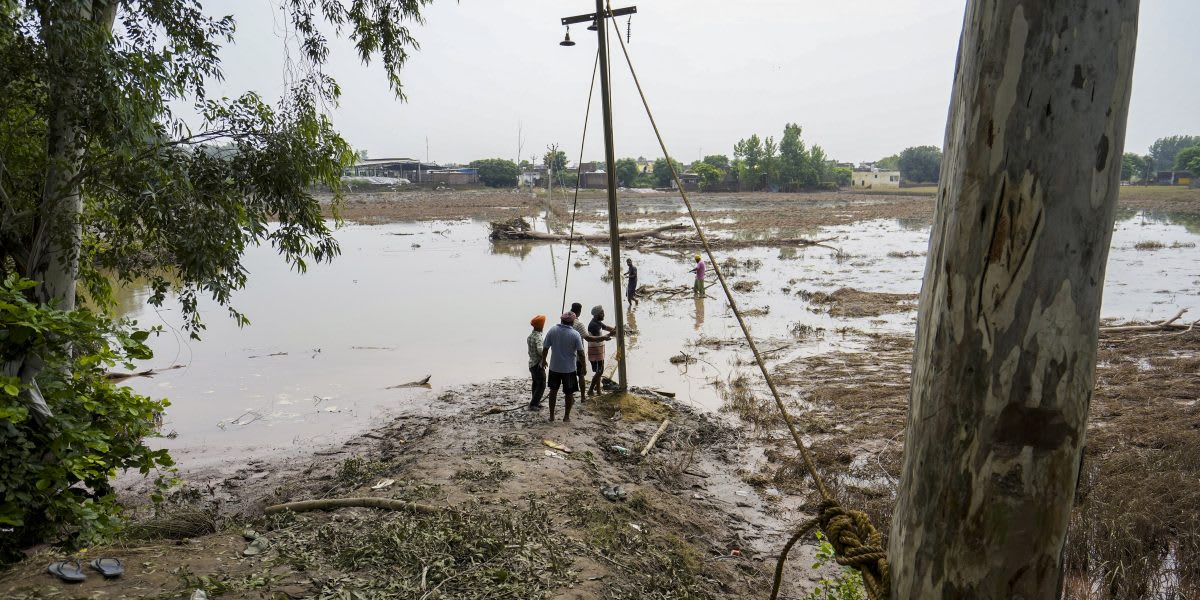
The countdown to COP30 in Belém, Brazil, is more than a date on the diplomatic calendar. It’s a stress test of the world’s economic and institutional resolve. For India, the stakes are immense. As one of the largest developing economies and a prominent voice in the Global South, India stands at the crossroads of economic growth, ecological responsibility and political leadership. The question is no longer if climate change will reshape our development trajectory but whether we prepared fiscally, institutionally, and behaviourally for the future knocking at our door.
From the vantage of macroeconomics, climate change is now a textbook example of a negative externality – a hidden cost of pollution and emissions that affects everyone, especially those who did not cause it. Rising global temperatures, erratic monsoons, crop failures, and heat stress are already affecting India’s people, its GDP, employment patterns, and supply chain resilience. But what concerns experts more is our level of preparedness. A recent Deloitte report estimates that India needs over $1.5 trillion in climate-related investments by 2031. These funds are crucial to meet our Nationally Determined Contributions (NDCs) under the Paris Agreement, particularly the targets of 500GW non-fossil energy capacity and enhanced carbon sinks. From a fiscal standpoint, these goals require huge public and private investments.
From a microeconomic perspective, behavioural economics helps explain why climate action is often delayed. It is not simply due to lack of awareness. Factors such as bounded rationality (making decisions with limited understanding), time inconsistency, and cognitive biases often lead individuals and governments to prioritise immediate needs like jobs, energy security, or inflation control over long-term climate goals. As Herbert Simon argued, people often “satisfice” rather than optimise in complex situations. Without structured incentives, information clarity, and behavioural nudges, climate-smart decisions are routinely postponed.
To respond effectively, India must rethink climate policy not as a standalone agenda, but as part of the broader economic architecture. Traditional macroeconomic models often overlook dimensions critical to transition such as institutional capacity, care work, and regional vulnerability. Climate resilience needs to be central to how we understand and teach development, inequality, labour markets, and fiscal policy.
India’s readiness for COP30 should be evaluated not just by the boldness of our targets, but by how well climate risks are embedded into everyday policy. Priorities must include phasing out fossil fuel subsidies, implementing robust carbon pricing, and scaling up climate finance via green bonds, PLI schemes, and clean-tech accelerators. Yet, fiscal tools alone are insufficient and won’t solve the problem. Decentralisation is just as important. Local governments are often the first responders to climate shocks, yet they remain under-resourced and under-equipped. Real climate resilience demands empowering municipalities and state governments with data, funding autonomy, and institutional flexibility to craft region-specific adaptation strategies. A climate federalism model that recognises differentiated state capacities and vulnerabilities could become central to India’s adaptive strategy.
Equally important is investment in human capital. Building a climate-ready workforce means upskilling in areas such as renewable energy, ecological economics, circular economy innovation, and climate-resilient agriculture. No transition is complete without active public engagement. Behavioural nudges like smart meters, dynamic energy pricing, and real-time climate dashboards can reshape consumption behaviour and create societal buy-in.
India’s place in the BRICS alliance and the Global South gives us a unique opportunity and responsibility to lead. The idea of “common but differentiated responsibilities” remains central: rich countries must do more, but India, too, must lead by example. At the same time, we must stay alert to geopolitical challenges. Changes in US climate policies, or the risk of a global economic slowdown, may affect international climate finance and cooperation. This creates a trust problem similar to what economists call a game theory dilemma where very country knows joint action is best, but some hesitate, hoping others will act first. If everyone waits, the world loses.
Climate change is no longer an abstract or future-facing debate, it is a present crisis demanding urgent, coordinated, and inclusive action. True preparedness means aligning incentives, anticipating systemic risks, and building institutions that prioritise long-term resilience over short-term fixes. As COP30 approaches, India must demonstrate that its climate ambition is matched by fiscal clarity and institutional readiness. If there’s no Planet B, there can be no half measures. This must be the moment when India shows that its climate ambition is backed by economic clarity, institutional strength, and people-first policy.