Tariffs and Taste Buds: When Nationalism knocks at the breakfast table
Patriotism in policy matters. It cannot simply be squeezed out of ketchup bottles in the name of local loyalty. True economic independence requires structural strength, resilient industries, and a seat at the global trade table that cannot be overturned by sudden tariff walls!
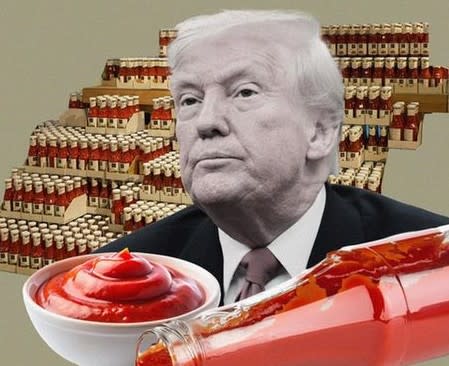
The smell of pakoras wafts across the breakfast table, the morning paper sprawled open beside a half-squeezed ketchup bottle. On page one, the headline blares: “U.S. doubles tariffs on Indian goods to 50%.” [1] The news is heavy, but the scene feels oddly ordinary golden pakoras, a dollop of ketchup, and a quiet choice that suddenly feels political. Do we reach for Heinz, the American staple, or for Kissan and Maggi, Indian names stitched into our food memories? On the surface, it is just sauce. But beneath it lies the story of global trade wars, rising protectionism, and India’s quiet struggle to balance patriotism with pragmatism. In today’s India, this decision is no longer just about taste. It is about belonging to a club the “buy local” camp versus the “global brand” loyalists. The ketchup wars might look trivial, but they reflect a much bigger story of how economics, nationalism, and global trade collide. And the previous month, that collision has become more visible than ever.
The United States has doubled tariffs on Indian goods from 25% to 50%. For exporters, this is nothing short of a thunderclap. Apparel, leather, gems, furniture, machinery, seafood the list of impacted sectors is long, and industry bodies are already insulating export losses of up to 40 per cent. Orders are being cancelled, containers are stuck at ports, and the smaller the firm, the heightened the agony. Washington frames this tariff hike as a matter of principle, pointing to India’s continued purchase of discounted Russian oil, while New Delhi calls it protectionist, unfair, and disruptive to an already fragile global trade order. Whatever the diplomatic chess game, the consequences are immediate and real; thousands of exporters now face the possibility of lost markets and shrinking margins. This is where the ketchup story stops being cute and starts being more serious.
For the last few years, the Indian consumer has been nudged into making patriotic choices. “Vocal for Local” is not just a mere slogan; it has reshaped how Indians shop. A preference for Indian smartphones, cars, packaged foods, and apparel is often presented as an act of economic self-reliance, a way of strengthening the domestic economy one purchase at a time. But here lies the paradox: while the consumer is being asked to protect the Indian producer at home, the same producer is being punished abroad. What good is it if I skip Heinz for Kissan at my table, but Kissan’s own production line struggles because machinery imports become costlier or export markets close off under new tariff walls? Nationalism in consumption, however symbolic, cannot make up for barriers in production!
History reminds us that protectionism is contagious. When the United States closes its doors, others may follow. For India, which has ambitions of becoming a global export hub, the risks are immense. Our demographic dividend, our vast labour force, and our manufacturing dreams depend not just on domestic loyalty but on international access. Tariffs imposed on Indian goods may be framed as temporary political bargaining tools, but for small and medium exporters, they mean existential crises. A globalized economy cannot be sustained if economic nationalism is seen only through the prism of consumption while ignoring structural vulnerabilities. So, what is to be done? First, India needs to accelerate its trade diversification. Relying too heavily on Western markets makes exporters vulnerable to sudden political shifts. Southeast Asia, Africa, and Latin America are not just “alternative markets”, they are the growth zones of the future. Indian exporters must be assisted to enter these geographies through targeted incentives, trade missions, and financing support. Second, bilateral and regional Free Trade Agreements (FTAs) must move from negotiation tables to signing ceremonies. The Australia-India Economic Cooperation and Trade Agreement showed what is possible, and similar agreements with the UK, EU, and Latin American partners must be pushed through with urgency. Third, the government cannot leave small and medium exporters to fend for themselves. Credit guarantees, export insurance, and temporary subsidies can soften the immediate blow of the 50% tariff wall as we know that large corporations may absorb the shock, but MSMEs cannot.
Finally, domestic value chains must be strengthened. If Indian ketchup, textiles, or furniture depend heavily on imported inputs, then every tariff hike abroad or supply disruption elsewhere will ripple through our economy. Self-reliance, in this sense, is not about closing our borders but about reducing fragile dependencies. And yet, even as policies are debated in ministries and boardrooms, the symbolism of the ketchup bottle lingers. Choosing Kissan over Heinz will not solve the tariff crisis, but it reminds us that economic nationalism is lived not only through trade policy but also through everyday choices. Still, those choices must be matched with coherent strategy. Otherwise, patriotism risks being reduced to slogans at home while our exporters bleed abroad. India cannot afford that mismatch. The lesson is clear: nationalism is not a condiment. It cannot simply be squeezed out of bottles in the name of local loyalty. True economic independence requires structural strength, resilient industries, and a seat at the global trade table that cannot be overturned by sudden tariff walls.
So next time you reach for ketchup, think about it not just as a flavour but as a metaphor. Yes, patriotism at the table matters, but patriotism in policy matters far more!
[1] The Tribune. (2025, August 27). Trump’s 50% tariffs on Indian goods come into effect, experts see opportunities to diversify markets. The Tribune.