The AI-HR Convergence: Redefining Talent, Trust, and Transformation in Industry 5.0
The convergence of AI and HRM in Industry 5.0 is transforming recruitment, retention, and performance management. Balancing data with empathy, and ethics with efficiency, HR now drives human-centric, sustainable workplaces where technology enhances rather than replaces human potential.
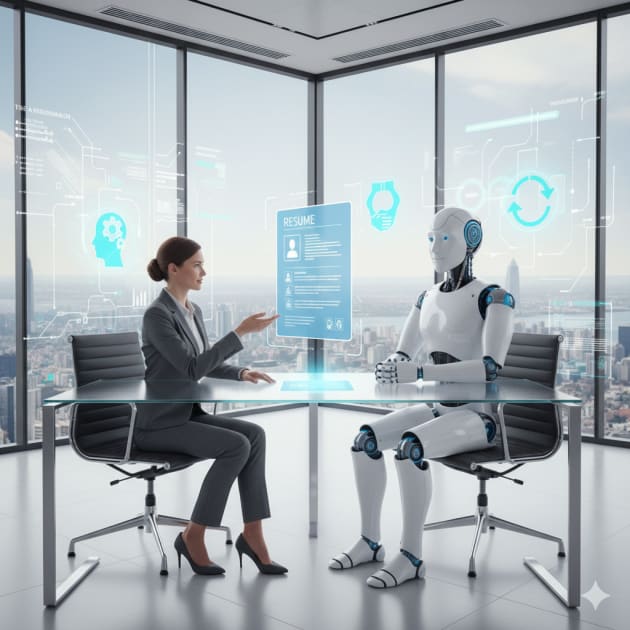
The AI-HR Convergence: Redefining Talent, Trust, and Transformation in Industry 5.0
By Dr. Nageswara Rao Aderla
Human Resource Management (HRM) has always been about understanding people, potential, and performance. But in today’s business landscape, the role of HR is undergoing its most radical transformation yet—driven by the twin forces of Artificial Intelligence (AI) and the emerging paradigm of Industry 5.0. While Industry 4.0 emphasized automation, data, and digitalization, Industry 5.0 pushes us to ask a deeper question: How do we balance human well-being with machine intelligence to create sustainable, resilient organizations?
This convergence of AI and HRM is no longer a futuristic dream; it is unfolding rapidly across sectors, redefining the way organizations attract, develop, and retain talent.
From Recruitment to Retention: The AI Advantage
One of the most visible applications of AI in HRM lies in talent acquisition. Automated résumé screening, chatbots for candidate interaction, and predictive hiring models are helping recruiters manage high-volume applications with speed and precision. AI can identify skills, flag mismatches, and even forecast cultural fit based on behavioral data.
But the value doesn’t end with hiring. AI-enabled onboarding platforms personalize learning journeys, while AI-driven analytics continuously track employee engagement, helping HR professionals tailor interventions that improve retention. Imagine a system that alerts HR when an employee shows early signs of disengagement—allowing managers to step in before attrition occurs.
Performance Management in the Age of Algorithms
Traditional performance reviews—annual, subjective, and often dreaded—are giving way to continuous, AI-supported performance management systems. Tools now analyze project data, peer feedback, and even communication patterns to offer real-time insights into employee contributions.
This shift makes performance management more dynamic, transparent, and aligned with business outcomes. At the same time, HR must ensure these systems do not reduce people to mere metrics. In Industry 5.0, performance conversations are expected to combine data-driven accuracy with the uniquely human qualities of empathy, coaching, and support.
Predictive HR Analytics: Seeing Around the Corner
Predictive analytics is one of the most powerful gifts AI offers HR. By analyzing historical and real-time data, AI can forecast workforce trends—such as turnover risks, training needs, or leadership potential. For instance, algorithms can identify which employees are most likely to seek promotions or leave within six months, enabling proactive career development and retention strategies.
In a volatile labor market, this foresight can make the difference between organizational resilience and talent drain.
Ethics and Trust: The New Currency of HRM
While AI promises efficiency, it also raises serious concerns around bias, transparency, and trust. Algorithms trained on biased data can inadvertently reinforce inequality in hiring or promotions. Employees may also resist surveillance-heavy tools that track keystrokes or monitor productivity.
This makes ethical AI governance central to the future of HR. Organizations must create policies that ensure fairness, data privacy, and explainability in AI-driven HR practices. In Industry 5.0, HR leaders are not just implementers of technology; they are guardians of human dignity in digital workplaces.
Human–Machine Collaboration: The Future of Work
Industry 5.0 is not about replacing humans with robots; it is about redefining collaboration between humans and machines. In HRM, this means leveraging AI to handle repetitive, analytical tasks while freeing humans to focus on creativity, emotional intelligence, and strategic decision-making.
For example, AI can generate insights from massive data sets, but it takes a human leader to interpret those insights in context, inspire teams, and navigate cultural sensitivities. The future of HR lies in building this balancewhere machines enhance human capability rather than diminish it.
HR’s Role in Shaping the Human-Centric Enterprise
As organizations embrace AI, the role of HR becomes more critical than ever. HR professionals must:
· Develop AI literacy to understand both the capabilities and limitations of emerging technologies.
· Redesign learning and development to equip employees with hybrid skills, technical, analytical, and interpersonal.
· Foster a culture of trust and inclusion, ensuring that technology adoption does not widen inequalities.
· Align AI strategies with organizational values, emphasizing well-being, sustainability, and social responsibility.
In doing so, HR is not just adapting to AI; it is actively shaping the ethical and strategic frameworks of the future workplace.
Conclusion: Beyond Technology, Towards Transformation
The AI-HR convergence is more than an operational shiftit is a philosophical one. It challenges organizations to ask how technology can serve human flourishing, not just efficiency. In the coming years, those institutions that succeed will be the ones that strike the right balance between data and empathy, algorithms and ethics, machines and meaning.
Industry 5.0 is not just the next industrial revolution; it is a human revolution. HR stands at the heart of this transformation, ensuring that in the rush to embrace AI, we never lose sight of the human spirit that makes organizations truly thrive.