Trade War Dynamics: Incremental Ripples in the U.S Economy Rather Than Seismic Shifts
Since Feb 2025, U.S. tariffs on goods from India, China, Mexico, and the EU have led to incremental economic ripples, not seismic shifts. Inflation rose but didn't skyrocket. The average 18% tariff wasn't high enough to force manufacturing relocation, with companies absorbing costs.
Introduction:
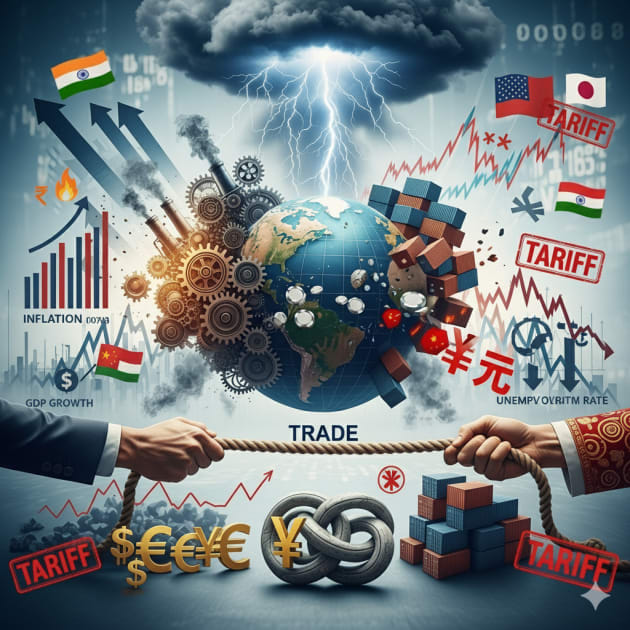
It all started in February 2025, when President Trump started a series of tariff impositions on countries exporting goods to the USA. Historically, the USA is known to have championed liberalized global trade, but recent years (starting with 2018—US-China), under the Trump administration, marked a turning point in US trade policy. The ongoing trade war in 2025—majorly focused on India, China, Mexico, and the European Union—has influenced international trade flows, industrial competitiveness, and geopolitical alignments.
All Trump detractors have warned of sharp inflation and even shortages in stores because of these trade implications in the U.S. economy. In the last six months of the tariff imposition, the economies around the globe have not crashed. Inflation has moved up but not skyrocketed as previously predicted. On the other hand, though the imposition of tariffs has brought a ton of money to the US treasury, the amount is not sufficient to replace income taxes as predicted by the Trump government.
The US tariff by nations and the export % to the US
Why are the economic indicators not reflecting as was predicted before?
Most of the economists believe that the tariffs are not high enough to force many types of manufacturing to relocate to the U.S. The average import tariff rate on the import of goods is roughly 18%, which is significantly higher than last year's 2.5% but still not high enough to make a big impact. As per the statement by Brad Setser, who is a senior fellow at the Council on Foreign Relations and a former economic and trade official in the Biden and Obama administrations, “The tariffs, while high, often aren’t high enough to offset a still-strong dollar that makes it expensive to produce in the U.S.”
Consumers in the USA have not felt the heat of the increasing inflation, as most of the companies in the USA have absorbed the extra tariff, as they are worried about losing their customers by hiking their prices.
Has the tariff increase helped in sales/government revenue?
Tariffs have bolstered some domestic industries like steel; some manufacturers have reported an increase in their sales, particularly at the start of the tariff war, as customers were looking to avoid the extra amount that they had to pay. Given the cost of labor in the U.S, some goods will still be cheap to produce overseas compared to making them in the U.S.
The U.S. government revenue till August 2025 stood at around $183.6–$183.1 billion (Fox News), out of which around $127 billion was collected from tariff revenue, which is $72 billion more than the previous year. The Trump government claims that the same can replace income tax for many Americans, particularly those under $200,000, but the same looks difficult, as in 2022, the bottom 90% of households—with adjusted gross income below $179,000—paid about $600 billion in individual income tax.
Tariffs have helped certain sectors in the U.S., like steel and small and mid-sized manufacturers, who have reported an increase in their sales numbers. Most economists have a view that these sectors have benefited either because customers have given more orders by stacking up goods to avoid paying tariffs or sectors with excess capacity are using the same to fill the void that will be created because of increased tariffs.
But even after the increased tariffs, most of the products will still be cheaper to produce outside the U.S., given the high cost of labor and intricate supply chains. The ever-changing mind of the current U.S. president is also discouraging companies from investing in the new U.S. factories.
Road Ahead—The Economic Impact of Tariffs:
From the last tariff announced till now, the world has not seen major changes happening in terms of changes on economic indicators, but going forward we might see a major impact on the world economy. New laws like HIRE (The Halting International Relocation of Employment Act), if passed, can seriously impact IT services outsourcing from the US to the rest of the world. Tariffs have already put a lot of pressure on petrochemical sectors around the world, and if the same continues, it’s expected to drop down by 15% in global petrochemical trade.
This all could lead to an increase in the economic indicators specially Inflation in the U.S. economy, as the flow of funds will either start coming back to the U.S., or companies will start opening their production lines in the U.S. if the tariffs are increased again.