A Gathering Storm: Trade Frictions Between the United States and India in an Age of Energy Realignment
The war in Ukraine, which began on 24 February 2022, has altered far more than the geography of Eastern Europe. It has rearranged global energy markets, unsettled financial hierarchies, and placed countries like India at the centre of a new geopolitical equation.
A Gathering Storm: Trade Frictions Between the United States and India in an Age of Energy Realignment
Prof Dr Ravinder Rena
Full Professor of Economics
School of Business
Woxsen University, India
The war in Ukraine, which began on 24 February 2022, has altered far more than the geography of Eastern Europe. It has rearranged global energy markets, unsettled financial hierarchies, and placed countries like India at the centre of a new geopolitical equation. What began as a regional conflict has evolved into a worldwide economic recalibration. Nowhere is this more evident than in India’s rapidly expanding oil trade with Russia — and the resulting tensions with the United States.
Until recently, Russia was a marginal supplier in India’s crude oil basket. In 2021, its share was less than 2 percent. In 2024–25, Russia exports roughly 38 percent of crude oil crude to India, making India as second largest importer of Russian oil after China being the largest importer with 49 percent. This dramatic shift reflects both necessity and opportunity: necessity for Russia, as Western sanctions shut down traditional European markets; opportunity for India, which seized the chance to secure crude at discounted prices, often around $55 per barrel — significantly below prevailing international benchmarks $71 per barrel. According to the latest statistics, India imported about $150+ billion worth of crude oil from Russia since February 2022 (for the last 4 years of Ukraine and Russia war).
The economic logic is straightforward. India is the world’s third-largest oil importer and relies on foreign suppliers for over 80 percent of its crude oil needs. For an economy of India’s scale — now the fourth largest globally — energy costs directly influence inflation, fiscal stability, industrial competitiveness, and the strength of the rupee. Access to discounted Russian crude has allowed India to save an estimated $25 billion in foreign exchange during fiscal year 2023–24 alone. In a country where managing the current account deficit and controlling price pressures are persistent policy challenges, such savings are far from trivial.
But energy is never merely an economic commodity. It is a strategic asset, and in today’s world, it is also a political instrument in the Geopolitics.
The Reconfiguration of Global Energy Flows
When Europe reduced its dependence on Russian oil and gas following the invasion of Ukraine, Moscow was compelled to redirect its exports. Asian economies — particularly India and China — emerged as alternative markets. Russia’s oil exports to China now account for roughly 49 percent of its total shipments, while India absorbs approximately 35–40 percent of its redirected flows.
At the height of the realignment, Russian crude was offered at discounts of nearly $30 per barrel compared to Brent. Although that differential has narrowed to between $2 and $7, the price advantage remains meaningful for Indian refiners. India’s substantial refining capacity — among the largest in Asia — enables it to process heavier, discounted crude into high-value petroleum products such as diesel, aviation turbine fuel, and gasoline. These products are not only consumed domestically but also exported, reinforcing India’s role as a net exporter of refined fuels.
Thus, the arrangement is mutually reinforcing Russia secures stable demand despite sanctions, and India benefits from affordable inputs that support domestic stability and export competitiveness.
American Concerns and the Dollar Question
The friction arises not solely from the volume of oil trade, but from its financial architecture. A growing portion of these transactions has been settled in Indian rupees or alternative currencies rather than in U.S. dollars. For Washington, this development is troubling on two fronts.
First, it potentially dilutes the effectiveness of Western sanctions designed to constrain Russia’s financial flows. Second, it touches a far more structural concern: the centrality of the U.S. dollar in global trade and finance. The dollar’s dominance grants the United States considerable leverage in international economic affairs. Moves by major economies to experiment with non-dollar settlements — whether through bilateral arrangements or broader platforms such as BRICS — are seen as incremental steps toward a more multipolar monetary order.
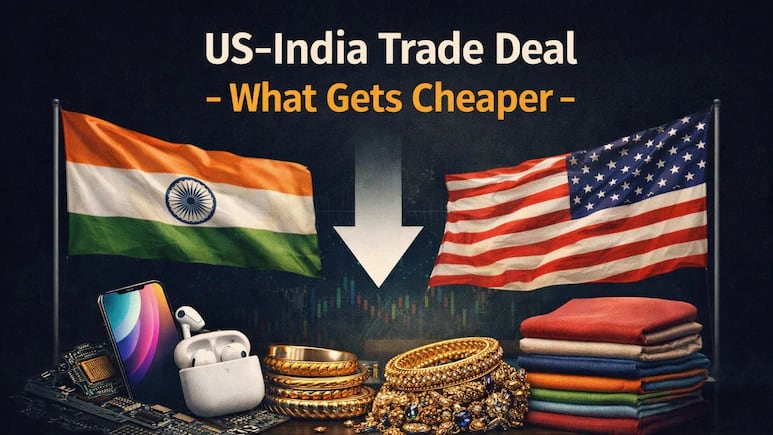
The United States has responded with increasing unease. On 27 August 2025, tariffs on selected Indian goods were raised from 25 percent to 50 percent, signalling a sharpening of trade tensions between two countries (America and India) that otherwise describe their relationship as a “comprehensive global strategic partnership.” The tariff escalation has imposed real costs on Indian exporters and prompted New Delhi to diversify aggressively, reportedly investing over ₹20,000 crore to re-explore and expand into 44 alternative international markets.
The irony is evident. At a time when India and the United States collaborate closely in defence technology, semiconductor supply chains, and Indo-Pacific security initiatives, trade friction rooted in energy pragmatism threatens to complicate the broader relationship.
BRICS and the Multipolar Impulse
The evolving role of BRICS — comprising Brazil, Russia, India, China, and South Africa — further contextualizes these tensions. Within this grouping, discussions about reducing reliance on the dollar have gained momentum. Mechanisms for local-currency settlements and alternative payment systems are being explored with renewed vigour.
For India, however, it is not an ideological crusade against the West. It is a calculated effort to diversify risk. As a country that values strategic autonomy — a principle embedded in its foreign policy since independence — India seeks to maintain productive relations with both Western allies and non-Western partners. Its energy purchases from Russia should be understood through this lens of economic rationality rather than geopolitical alignment.
India has consistently defended its stance by emphasizing energy security. Officials argue, with some justification, that a country importing more than four-fifths of its crude oil cannot afford to disregard discounted supplies, particularly when alternative sources would raise costs and intensify domestic inflation. In a developing but emerging market economy like India, with pressing infrastructure, employment, and social spending needs, energy affordability is not a luxury; it is a macroeconomic imperative.
The Broader Economic Implications
The scale of the transformation is striking. Bilateral oil trade between India and Russia, valued at roughly $1.1 billion before the Ukraine conflict, surged to over $50 billion within two years. Few shifts in modern energy history have occurred so swiftly.
The macroeconomic dividends have been significant. Lower import bills have helped stabilize foreign exchange reserves, moderate fuel subsidies, and support industrial output. At a time when global oil prices have exhibited volatility — fluctuating between $70 and $100 per barrel in recent years — securing supplies at discounted rates has shielded Indian consumers from sharper price spikes.
At the same time, the trade imbalance between India and Russia has widened considerably, given that India imports far more from Russia than it exports in return. This asymmetry poses its own structural challenges, particularly regarding payment mechanisms and currency accumulation. Over time, India will need to expand non-oil exports to Russia or devise sustainable financial channels to manage this imbalance.
A Delicate Balancing Act
The deeper question is whether energy pragmatism can coexist with strategic partnerships in an increasingly polarized world. India’s relationship with the United States spans defence cooperation, technology transfers, educational exchanges, and joint efforts in the Indo-Pacific. The United States remains one of India’s largest trading partners and a major source of investment and innovation.
Yet economic sovereignty compels India to prioritize affordable energy. From New Delhi’s perspective, purchasing discounted crude does not constitute political endorsement; it is an exercise in economic necessity.
This balancing act reflects a broader transition in the global order. The post-Cold War era, characterized by relatively unchallenged Western financial dominance, is gradually giving way to a more plural configuration. Energy flows are diversifying, payment systems are evolving, and middle powers are asserting greater autonomy. India’s decisions must therefore be read not as acts of defiance but as indicators of structural change. A country of 1.45 billion people, striving to sustain high growth rates and lift millions into the middle class, cannot subordinate economic fundamentals to external expectations.
Conclusion: Economics in a Geopolitical Age
The emerging trade friction between the United States and India illustrates how deeply economics and geopolitics are intertwined in our era. The redirection of Russian oil to Asia, the experimentation with non-dollar settlements, and the imposition of higher tariffs are not isolated events. They are interconnected signals of a world in transition.
India’s surge in Russian oil imports — from under 2 percent to nearly 38 percent within four years — underscores the power of economic incentives. The estimated $25 billion in annual savings demonstrates the tangible stakes involved. Meanwhile, American concerns about sanctions efficacy and dollar centrality reveal the strategic dimensions embedded within financial transactions.
Ultimately, this is less a story of confrontation than of adjustment. As global power diffuses and supply chains reconfigure, nations will pursue their interests within an evolving framework of constraints and opportunities. The challenge for policymakers in both Washington and New Delhi is to ensure that temporary frictions do not undermine a partnership of long-term significance.
In the final analysis, energy security, monetary sovereignty, and trade diplomacy are converging into a single, complex equation. How India and the United States manage this equation with its new tariff rate reduced from 50 percent to 10 percent will not only shape their bilateral ties but also influence the contours of the emerging multipolar economic order.
Prof Dr Ravinder Rena
Full Professor of Economics, School of Business, Woxsen University, India
Contributor at Woxsen University School of Business