Beyond Buzzwords: How the People Lab is Reinventing Work for Resilience and Engagement
The People Lab redefines work with evidence-based strategies for resilience & engagement, offering HR leaders a data-driven blueprint for a thriving, human-centric workplace.
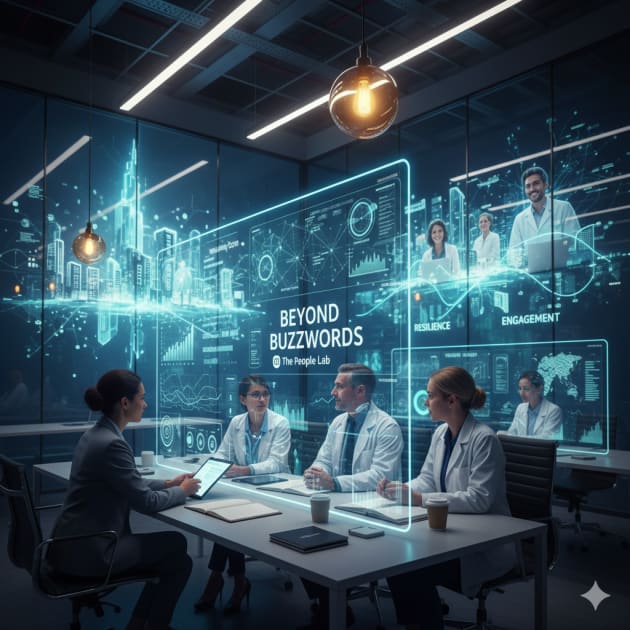
The People and Organizational Lab is revolutionizing workplace design through evidence-based strategies, moving beyond vague buzzwords like "synergy" or "unleash potential." As a research unit, it conducts systematic experiments on organizational design, leadership models, and employee experience programs to deliver measurable, high-impact solutions.
Problem Studied: The Lab tackles the challenge of building workplaces that foster resilience—the ability of individuals and organizations to adapt and thrive amid constant change and disruption—and engagement—the emotional commitment employees feel toward their work and company mission, which boosts productivity and retention.
Why It Matters: In today’s volatile, fast-evolving work environment, resilience ensures organizations and employees can navigate uncertainty and setbacks effectively. Engagement drives performance, innovation, and loyalty, reducing turnover and enhancing business outcomes. By providing data-driven insights, the Lab equips HR leaders, executives, and managers with a practical blueprint to create sustainable, human-centric workplaces for 2025 and beyond.
The People and Organizational Lab is fundamentally changing workplace design by merging rigorous research methods with practical, evidence-based strategies, enabling businesses to build environments that foster both resilience and engagement. This leap beyond corporate jargon offers actionable solutions for today's most pressing organizational challenges.
Key Innovations and Evidence-Based Strategies
The Lab addresses workplace resilience by creating cultures that encourage recovery, adaptability, and growth, rather than expecting employees to simply "tough it out".
Systematic experiments are conducted on organizational structures, leadership models, and employee experience programs. For example, resilience training is woven into onboarding and major career milestones, making emotional agility, mindfulness, and stress management part of daily routines.
Managers are empowered as resilience multipliers—trained to detect distress early, facilitate meaningful conversations, and connect team members to mental health resources, thereby enhancing well-being and trust.
Feedback mechanisms such as structured debriefs and after-action reviews convert setbacks into learning opportunities, fueling continuous improvement and innovation.
The Lab also explores hybrid and AI-driven workplace trends, equipping staff to adapt to technology shifts and emphasizing human-centric skills like creativity and emotional intelligence for future-proofing teams.
Implications for Organizations and Leaders
Organizations embracing the Lab’s strategies report significantly higher productivity, stronger team collaboration, and reduced burnout. Employees feel empowered to navigate uncertainty, driving innovation and adaptability in the face of disruption.
Leadership development that prioritizes resilience not only supports individual well-being but also builds systemic robustness—ensuring teams can absorb shocks, recover, and even transform through adversity.
Investing in engagement and resilience positively influences retention: when employees are emotionally committed and feel that their organization genuinely supports their growth and health, loyalty and retention rise while attrition drops.
Data-driven HR platforms now track resilience indicators, providing real-time insights so leaders can intervene proactively. Companies using these systems get ahead of disengagement trends and can support their people before issues become crises.
The Lab’s approach to resilience is ongoing—much like physical fitness, organizational resilience must be cultivated and reinforced regularly through embedded practices and leadership modelling.
The Path forward
A Blueprint for Sustainable, Human-Centric Workplaces
The People and Organizational Lab demonstrate that resilience and engagement are neither buzzwords nor one-off initiatives—they are measurable, buildable assets central to organizational success in 2025 and beyond. By anchoring workplace design in evidence, continuous learning, and psychological safety, the Lab equips organizations to thrive amid rapid change. The implication is clear: sustainable business outcomes depend on environments where employees feel supported, empowered, and engaged. For HR leaders, executives, and managers, the Lab offers a practical blueprint rooted in data, experimentation, and compassion—a new standard for organizational excellence where people and innovation flourish together
References
1. Lyra Health. (2025, June 24). Resilience in the workplace: Turning challenges into growth. https://www.lyrahealth.com/blog/resilience-in-the-workplace/
PeopleHum. (2024, June 12). Workforce resilience: HR tactics to strengthen teams. https://www.peoplehum.com/glossary/workforce-resilience
OmniRetreat. (2025, September 14). Workplace resilience: Methods for individuals and organizations. https://omniretreat.com/workplace-resilience/
The TCM Group. (2025, January 20). How resilience in the workplace fuels growth and success. https://thetcmgroup.com/2025/01/21/how-resilience-in-the-workplace-fuels-growth-and-success/
Resiliencei. (2025, April 8). Workplace trends 2025: How resilience drives hybrid work, AI, and employee well-being. https://resiliencei.com/blog/workplace-trends-2025-how-resilience-drives-hybrid-work-ai-and-employee-well-being/