How Giants Go Blind: The Nokia Case and the Hidden Science of Disruption
Why do industry giants fall, even when they seem unbeatable? The article explores Nokia’s dramatic decline through Christensen’s Disruptive Theory, revealing how even the most successful firms can be blindsided by emerging technologies they underestimate. Continue reading to gain further insights.
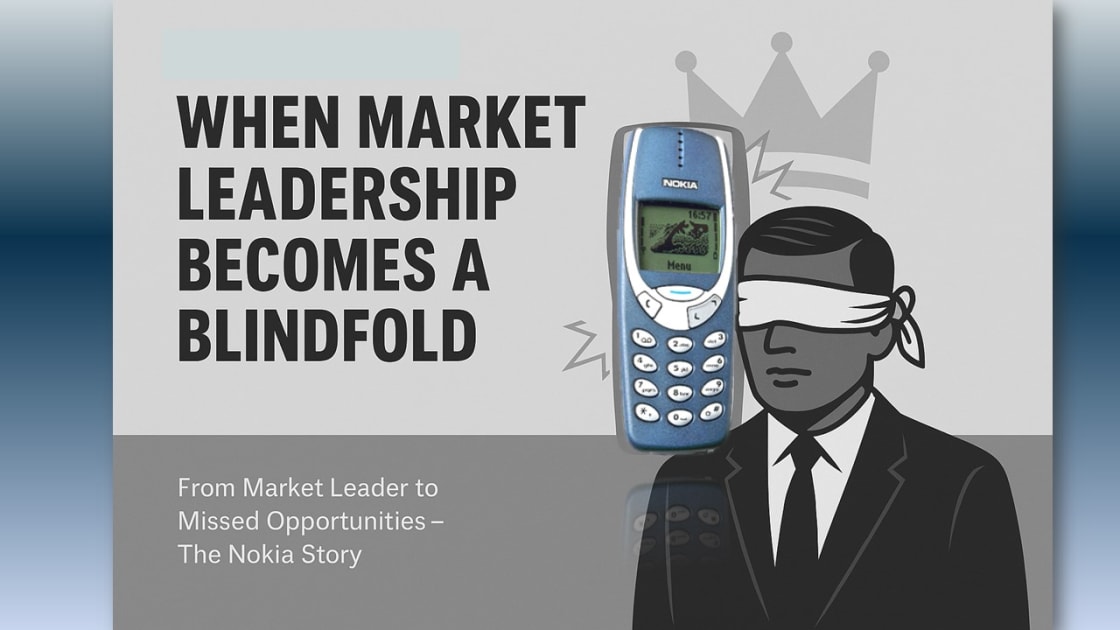
Life cycle theory states that enterprises will reach maturity. In the early 2000s, most people used Nokia phones. From the rugged 3310 to the slim flip phones that fit inside your hand, Nokia was everywhere. These tough gadgets allowed families, students, and businessmen to keep in touch, play Snake, and send messages. Reliable and innovative, the brand was recognized all over the globe.
Nokia's motto, "Connecting People," was familiar to millions of people throughout the world. After several years of success, the company's founders felt that they had a firm grasp on what customers wanted from a phone: strength, simplicity, and low cost.
For years, Nokia believed that it knew exactly what customers wanted. This confidence came from years of success, high market share, and strong industry leadership. But things were about to change.
Technologies are constantly developing. So around 2007, the mobile phone landscape began to alter. Apple introduced the iPhone, a phone with a touchscreen and no buttons. Initially, Nokia's leadership believed this proposal was ridiculous. They claimed that customers preferred keypads and would never switch to a phone that resembled a delicate, pricey piece of glass. Inside Nokia, engineers were aware that the company's software, Symbian, was not suitable for touchscreens. However, Nokia was so accustomed to its old ways that changing course seemed dangerous.
Because of this mindset, Nokia didn’t act quickly. Meanwhile, Apple and Google kept improving their smartphone software and app stores. In just a few years, smartphones became the new normal, and people wanted devices that could browse the internet, run apps, play music, take pictures, and more. Nokia found itself behind, and the fall was fast. The company that once ruled the mobile world became just another competitor.
Why Couldn't Nokia See the Change Coming?
Nokia did not fail because its employees weren’t smart. It failed because success blinded the company. Here are the simple reasons why:
Success made Nokia overconfident. The company believed what worked in the past would continue to work.
New information was ignored. If something didn’t fit Nokia’s beliefs, it was dismissed.
Nokia feared change. They had invested too much money and effort in the old systems.
The company saw itself as a hardware maker. But the future was all about software and apps.
This is where Christensen’s Disruptive Innovation Theory (Christensen, 1997) perfectly explains Nokia’s fall.
Christensen’s Disruptive Innovation Theory Applied to Nokia
Christensen’s theory explains why big companies will eventually lose to small ones.
The Nokia story is an example of this theory.
New Things Begin Small and Look Worthless Just like with the toy: Than an old man trying on his little grandson’s clothes for size. The first appearance of the iPhone was clearly a toy to Nokia: low shelf life performance, no keypad, and Nokia let it go. But this is the beginning of all disruptions.
1. Disruptions Start Small—and Look Unimportant
New technologies often look weak in the beginning. They look like “toys.”
The first iPhone looked like a toy to Nokia:
low battery life
slow performance
expensive price
no keypad
Because of this, Nokia ignored it. But this is how disruption always begins.
2. Disruptors Offer New Benefits, Not Better Old Ones
Nokia kept improving old features:
better battery
stronger hardware
better keypad feel
Apple focused on new features:
touchscreen
apps
internet browsing
music, video, photos
Soon, customers cared more about the new features than the old ones.
3. Big Companies Ignore Small Markets
Nokia served millions of mass-market customers. The first smartphones served small, premium customers.
Christensen’s theory says:
Big companies focus on current profits.
Disruptors focus on small, new markets.
That small market grew and took over the world.
4. Disruptive Products Improve Faster Than Expected
The first iPhone had problems. But it improved very fast:
better screens
faster processors
stronger battery
cheaper models
millions of apps
Nokia did not expect the improvement to be so fast. By the time it was understood, it was too late.
5. Nokia Was Stuck in Its Old Business Model
Nokia’s success created a trap:
Symbian was built for keypads, not touch
The company culture valued hardware, not software
Most revenue came from cheap feature phones
Managers were rewarded for old-style success
6. Disruption Comes from the Side, Not from Direct Competitors
Nokia expected competition from Motorola or Samsung.
But disruption came from:
Apple (computers)
Google (internet company)
These companies understood software ecosystems, not just devices .This move on the part of the hardware to focus on software was the real thing that created disturbances.
Christensen’s disruptive innovation theory explains the situation clearly:
New technologies often look weak in the beginning. They may seem slow, expensive, or unnecessary. But slowly, they improve and become the new standard.
This is precisely what happened with the iPhone and Android. They started small, but they improved faster than Nokia expected. By the time Nokia understood the trend, the world had already moved on to smartphones.
The main lesson is simple:
Big companies fail not because they are weak, but because they stop looking at small changes that later become significant changes.
References:
Christensen, C. M. (1997). The innovator’s dilemma: When new technologies cause great firms to fail. Harvard Business School Press.