“Marketing to Everyone is Marketing to No One”
Marketing to everyone means connecting with no one. Building customer personas helps brands like Nike and Netflix create targeted campaigns, boost engagement, and drive loyalty by speaking directly to their ideal audience.
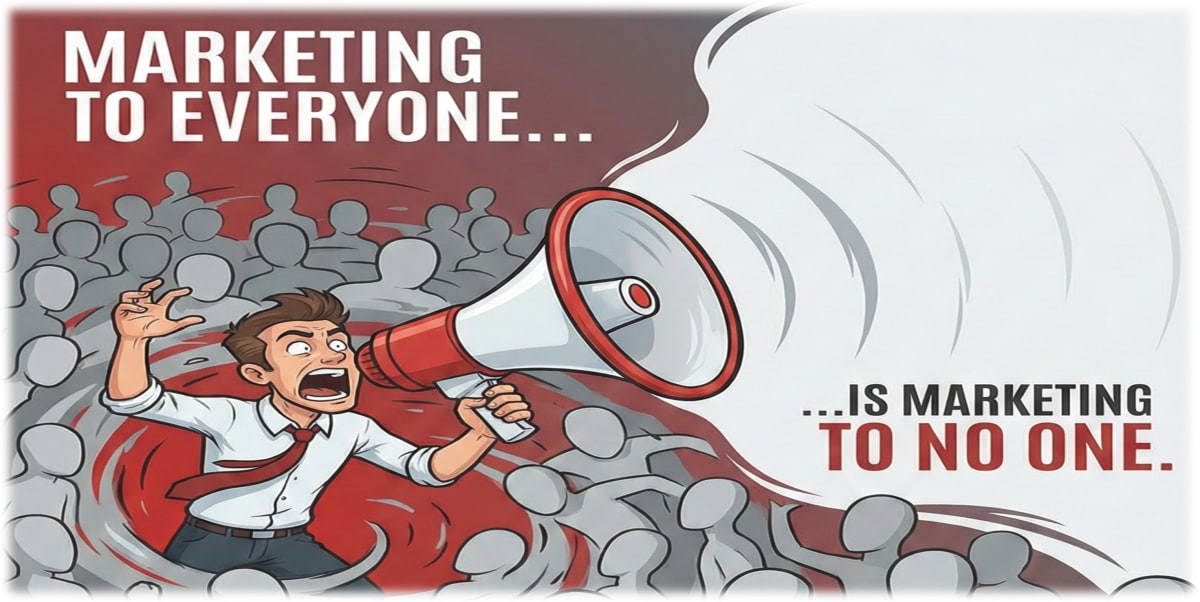
“Marketing to Everyone is Marketing to No One”
Introduction
We see hundreds of ads every day—whether it’s a sign on the street, digital screens, or those that pop up online across sites such as YouTube and Instagram. But the vast majority of these ads barely even register with us. They sound like just so much background noise, one more pushy salesperson trying to convince us to buy something we don’t need.
The reason? Most businesses are guilty of “marketing to everyone.”
That method is also one of the greatest current business obstacles.
When companies try to appeal to everyone, they appeal to almost no one.
This means that less than 1% of those who see the ad engage with the business.
So, what’s the solution?
It has to do with customer personas.
But before we get into how they work, let’s first discuss why business owners fall for the trap of broad marketing. People make business decisions, and the only way to change that is to reward them for making different choices. Fear often drives these choices—fear of missing other potential clients by zeroing in on one group. But as we’ll find out, the reverse is true.
What Are Customer Personas?
Failing to target an audience is a mistake most business owners make. That’s where customer personas take over.
A customer persona is an in-depth look at your target consumer. It's an effective method to get high-quality visitors and convert them into eager buyers. The use of personas allows business owners to understand the needs, challenges, and motivators of their customers. This wisdom can be applied to create content and campaigns that genuinely resonate on a client level.
Customer personas aren’t only beneficial for your marketing—they’re also a win for customer service, allowing teams to anticipate issues and deliver faster solutions. They can also help sales teams zero in on the groups most likely to make a purchase—saving them time and making them more efficient. In terms of product development, identifying the target market enables teams to develop functionalities that will satisfy them best to attract and retain customers who are pleased with the product and increase brand reputation.
Examples: How Leading Brands Leverage Customer Personas
Here are a couple of companies that have done an excellent job of utilizing customer personas:
Nike: The “Aspirational Athlete” Persona
Nike is one of the world’s biggest sportswear companies, but its branding is not for everyone; it’s for people who identify as athletes, whether professional or amateur. "Aspirational Alex," a 25-year-old who adores sports and finds inspiration in performance, innovation, and style, could be considered one of Nike's key personas.
Nike’s “Just Do It” advertising and content both broadly and consistently cater to this persona’s quest for growth and success. Unlike many brands that target a broad range of ages and interests, Nike focuses specifically on dreamers and doers who aspire to run, jump, play, and push themselves to become stronger.
Apple: The “Creative Professional” Persona
Apple is another excellent example. If their products are for millions, Apple’s marketing frequently appeals to the “Creative Professional”—photographers, designers, and artists that demand quality design, uptime, and bleeding-edge monitoring & reactivity.
With this persona in mind, Apple frames its messaging on creativity, innovation, and excellence. Apple's creative marketing is iconic, demonstrating how its products assist intelligent and creative individuals in creating meaningful work, which in turn fosters greater loyalty among this important group.
Netflix: The “Binge-Watcher” Persona
Audience Personas: Netflix sifts through data to serve tailored recommendations & content. Netflix employs data-driven personas to personalize its recommendations and content. For instance, their “Binge-Watcher” is someone who enjoys spending entire days watching a particular TV show. Netflix has designed its user interface and promoted shows based on this viewing pattern, and the company’s modus operandi has been to produce series with that audience in mind.
This emphasis creates a deep level of emotional connection, and users get the sense that Netflix knows what they want in life.
L’Oréal: The “Beauty Enthusiast” Persona
The "Because You're Worth It" campaign by L'Oréal targets the "Beauty Enthusiast" who prioritizes self-care and keeps up with the latest beauty trends. L’Oréal uses personalized quizzes and targeted social media ads for delivering the most relevant product recommendations or beauty tips to this persona, so as to improve customer engagement and satisfaction.
To build a customer persona, start with a clear vision and follow a step-by-step guide.
The steps for creating customer personas will vary depending on your size and type of business. For small businesses, developing a few in-depth personas is usually easier and more practical. Here’s how you can create the perfect persona:
Internal Research
Begin by seeking insights from inside your company. Your sales reps are in constant communication with the customers, and they can give you valuable input on the frequent pain points, popular questions, customer problems, etc. Basic feedback forms, provided in exchange for discounts or coupons, can also help capture vital information—just make sure they are short to drive completions.
Market Research
Next, look outward. Explore how customers interact with similar businesses. Analyze demographics such as age, gender, and interests to get an idea of how your target audience interacts with the competition. Social media delivers priceless information about your customers' lifestyles and activities, allowing you to craft ads that resonate more deeply with them.
Customer Research
Finally, talk to your customers: the actual shoppers. For those types of things, nothing beats the one-on-one interview for receiving unvarnished feedback about your brand, product, or overall customer experience. Inquire about what they like, what’s unique about your brand, and why they picked you over other brands. You can refine your persona and marketing strategy with these details.
When you have enough data, humanize your personas by giving them names and faces. It makes them real for you and keeps your team focused. Don’t forget that customer personas need to be revisited periodically to remain current and useful.
Conclusion
Business needs to find a way of staying relevant and maintaining connectedness with customers. They enhance product development by helping you do things customers will actually want, which in turn saves time and money. They also improve customer service and increase the effectiveness of content marketing.
Ultimately, selling isn't about deceiving people; it's about addressing their issues with a compelling narrative and a viable solution. To achieve that, you have to really understand those problems, and that’s where customer personas come in.
Thank you for reading!