Orchestrating Experience: Why UI, UX, CX, and HX Matter More Than Ever
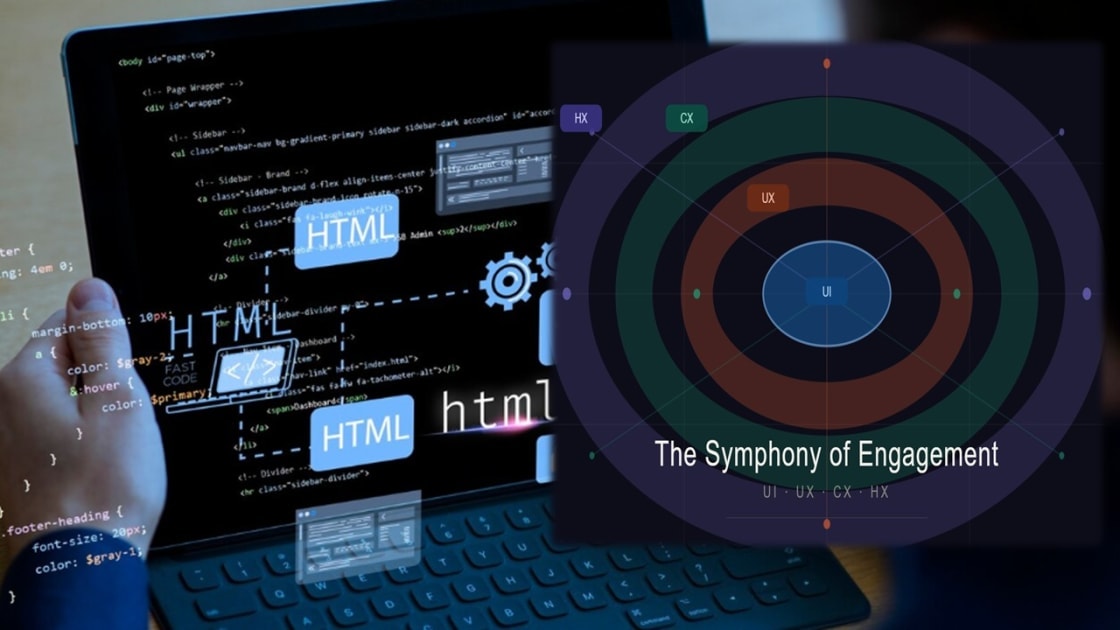
This article explores deeply into what sets User Interface (UI), User Experience (UX), Customer Experience (CX), and Human Experience (HX) apart—and how, together, they create a symphony of engagement that can propel brands and products to new heights.
Orchestrating Experience: Why UI, UX, CX, and HX Matter More Than Ever
In the fast-paced, ever-evolving landscape of digital and physical design, acronyms like UI, UX, CX, and HX have become more than just trendy buzzwords—they are now pillars of strategy for businesses aiming to create meaningful and memorable experiences. While these terms are often used interchangeably or misunderstood as minor variations of one another, each represents a critical layer in the architecture of user and customer engagement. Grasping their nuances is not only valuable for designers and developers but also essential for any organization seeking to thrive in today’s experience-driven world
The Foundation: Understanding UI—The Gateway to Interaction
At the most tangible level of any product or system lies its user interface, or UI. The UI is what users see, touch, and interact with directly. It’s the collection of screens, pages, buttons, icons, colours, and typographic choices that make up the visual and interactive elements of a website, mobile app, software platform, or any other digital tool.
UI is the stage on which every user journey begins. A well-designed user interface acts as a welcoming host, inviting users to engage, explore, and accomplish their goals efficiently. Modern users have high expectations: if an interface looks outdated or is difficult to navigate, they’re likely to abandon it for a better-designed alternative.
Key Components of UI
Visual Design: The aesthetics, layout, and overall feel of the interface. This includes everything from imagery to spacing to how the interface guides the eye.
Interactivity: Responsiveness to user actions—buttons that animate when pressed, menus that expand, or forms that provide real-time feedback.
Typography: The artful selection of fonts and text sizes to maximize readability and accessibility, shaping how information is absorbed and processed.
Colour Schemes: The palette is used to convey mood, draw attention, and reinforce brand identity, while also supporting accessibility for all users.
Let’s understand it with an example: Consider a food delivery app. Its UI is comprised of clean icons, easy-to-read menus, vibrant call-to-action buttons, and a layout that makes navigation effortless. The colours were chosen to evoke appetite, trust, and clarity.
Why UI Matters:
A compelling, intuitive UI lays the groundwork for every other experience. As the initial point of interaction, it has the power to either positively or negatively influence user engagement before any further actions take place.
The Journey: Delving Into UX—Designing Seamless Experiences
While UI is the immediate, visible layer, User Experience (UX) examines the broader journey a user takes from start to finish. UX considers how users feel, what they encounter, and how smoothly they can achieve their goals while interacting with a product or service.
UX is about crafting the entire experience—beyond just looks—making sure every interaction is intentional and enjoyable. It encompasses every touchpoint, from onboarding to troubleshooting, and seeks to remove friction, minimize confusion, and maximize satisfaction.
Core Principles of UX
Usability: How easily can users accomplish their objectives? Are workflows intuitive and logical, or do they require guesswork?
Accessibility: Can people of all abilities and backgrounds use the product with ease? Accessibility ensures inclusivity and broadens your audience.
Emotional Design: Does the experience evoke positive emotions? Are users delighted, reassured, or inspired by the design?
Information Architecture: Is content organized in a clear, logical way so that users can find what they need without effort or frustration?
For example, an online bookstore with well-labelled categories, a powerful search feature, concise product descriptions, and an easy checkout process demonstrates great UX. Whether a user is a first-time visitor or a returning customer, the journey feels seamless and satisfying.
Why UX Matters:
UX directly impacts retention, loyalty, and advocacy.
A beautiful UI is meaningless if the user journey is confusing or frustrating. When UX is prioritized, users are more likely to return, recommend, and even forgive occasional missteps.
The Relationship: Decoding CX—Crafting Memorable Customer Journeys
Customer Experience (CX) expands the lens even further, considering the sum total of a customer’s interactions with a brand—not just within a single product, but across all channels and touchpoints. CX is holistic, encompassing everything from marketing and sales to support and post-purchase follow-up.
CX is about orchestrating a consistently excellent journey that inspires customer loyalty and advocacy.
It asks: How does the brand make people feel from the moment they discover it to long after their first purchase?
Are all departments aligned to deliver a unified, frictionless experience?
Building Blocks of CX
Customer Journey Mapping: Visualizing the entire path a customer takes, from awareness and consideration to purchase and advocacy. This helps identify pain points and opportunities at every stage.
Consistency: Delivering a cohesive look, feel, and message across every channel, whether it’s a website, social media, in-store, or via customer support.
Personalization: Using data and insights to tailor experiences, offers, and communications to each individual’s preferences, increasing relevance and satisfaction.
Feedback Loops: Actively seeking, listening to, and acting upon customer feedback to continuously improve products, services, and interactions.
Consider this scenario: A shopper receives personalized product recommendations in an email, enjoys a streamlined checkout on the website, and gets prompt, friendly support when they have a question. After purchase, they’re invited to share feedback and receive a thank-you note. This is outstanding CX in action.
Why CX Matters:
CX is what turns satisfied users into loyal advocates. It’s the difference between one-time transactions and lifelong relationships. In today’s competitive marketplace, companies that invest in exceptional CX outperform those that don’t.
The Bigger Picture: Exploring HX—Impacting Human Life
At the summit of the experience hierarchy is Human Experience (HX), a concept that transcends the roles of “user” or “customer.” HX acknowledges that design decisions have broader implications for individuals, communities, and even society at large.
HX is about designing for humanity. It considers not only functional needs but also psychological, emotional, and social dimensions.
HX asks: “How does this product or service affect people’s well-being, sense of belonging, or overall life satisfaction? Does it empower, inspire, connect, or uplift?
Pillars of HX
Psychological Impact: Understanding the emotional and cognitive effects of design, from reducing anxiety to fostering confidence or joy.
Social Impact: Considering how a product contributes to or detracts from community, relationships, and social equity.
Evolutionary Design: Creating adaptable systems that grow and evolve with people’s changing needs, ensuring lasting value and relevance.
A strong example: A mental wellness app that not only tracks moods or habits but also connects users with supportive communities and resources. By encouraging positive behaviour and nurturing emotional health, HX exemplifies its broader promise.
Why HX Matters:
HX recognizes the profound, lasting influence that design can have on real lives. Companies that aspire to positively shape the human condition are those that lead with empathy, ethics, and a genuine commitment to well-being
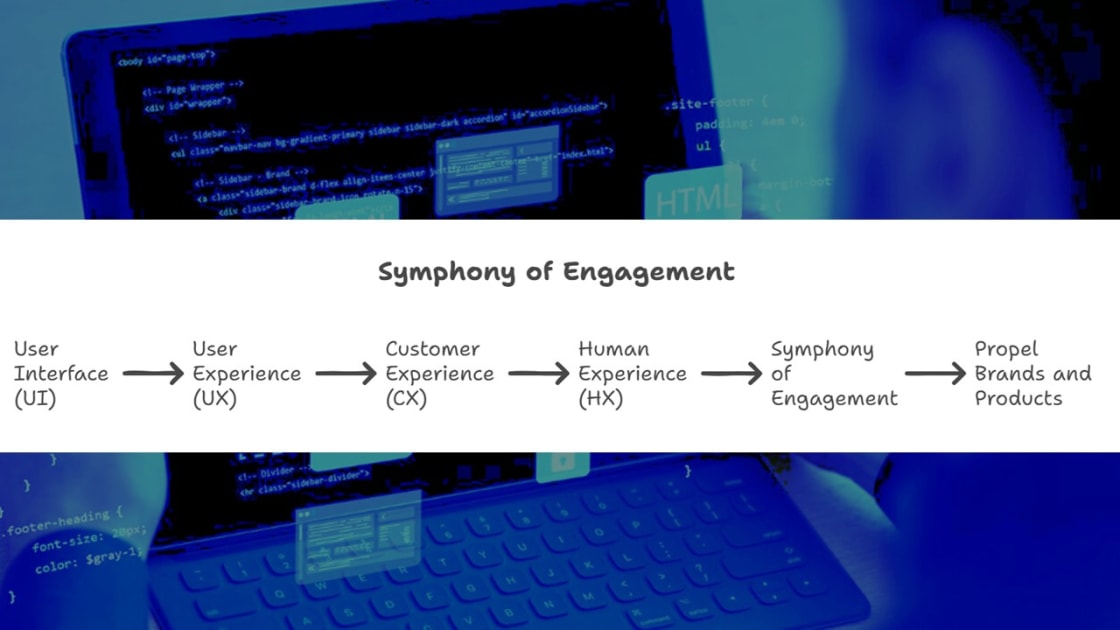
To conclude: The brands and products that propel themselves to new heights are the ones that conduct all four simultaneously—where every pixel decision (UI) serves the journey (UX), which reinforces the brand relationship (CX), which ultimately enriches the people it touches (HX). That coherence is rare. When you feel it—in a product that just works, that feels like it genuinely cares about you—you're experiencing all four layers playing in harmony.