Rupee at Record Lows- Its Analysis and Implications
The Indian Rupee has depreciated to an all-time low, despite low inflation, record forex reserves and strong economic fundamentals. We analyse this event through the prism of global yield shifts, widening trade deficits and changing RBI strategy
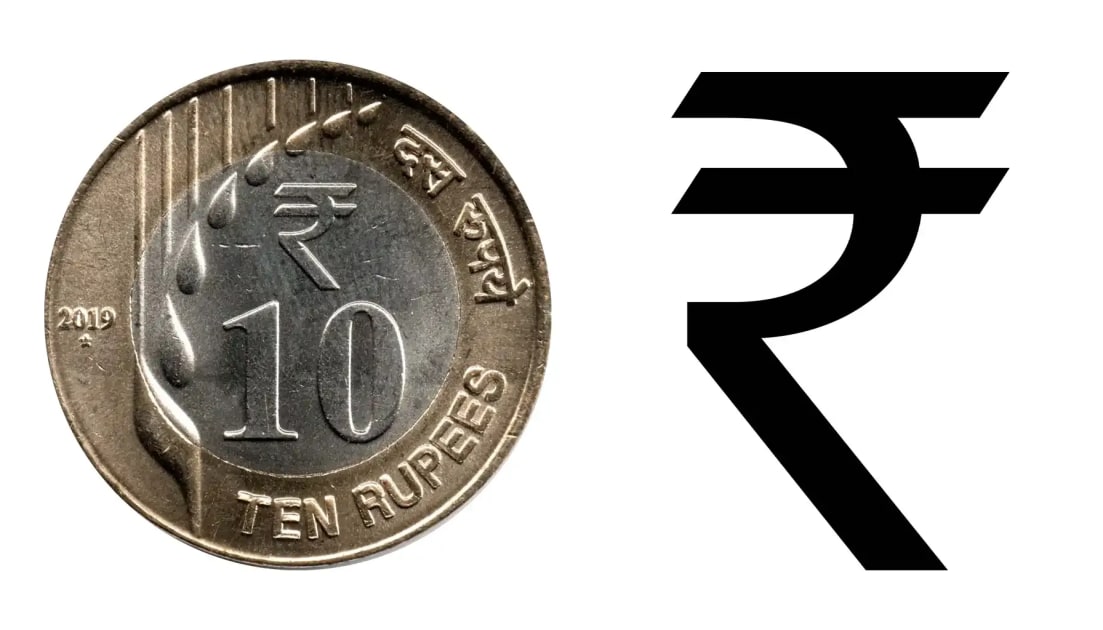
Rupee at Record Lows- Its Analysis and Implications
The Indian Rupee slumped to historic low December 3, 2025 when the INR briefly slipped to ₹90.30 against the US dollar, making it the worst-performing major global currency in 2025, registering a year-to-date decline of 5.3%.
What’s significant is that this fall has occurred despite the robustness of India’s core economic indicators.
This sudden phenomenon has baffled analysts and investors since India’s major economic parameters seem to be all healthy. Prices are stable as the wholesale inflation is at a historic low at 0.25%. Foreign exchange reserves are substantial, standing close to USD 700 billion, providing a substantial buffer against external shocks. GDP growth of 8.2% in the third quarter of 2025 indicate a prospering economy. Unemployment rate standing at 5.2%, along with Manufacturing PMI at 56.6 and Services PMI at 59.5 signal solid business activity. The indicators of Consumer and business confidence are also running high.
Currency rate movements are dependent both domestic fundamentals and external factors like global capital flows, interest-rate expectations, and trade dynamics, all of which have collectively resulted in pushing the Rupee lower.
Why Is the Rupee sliding?
A key reason has been a sudden significant liquidation of foreign portfolio investments from Indian equity markets by FIIs and their repatriation back to USA in anticipation of imminent interest-rate cuts by the US Federal Reserve thereby taking advantage of the current high yields in the US before the Fed decides to reduce rates.
The Rupee slide was further accelerated due to capital outflow by FIIs from Indian markets to Japan due to the strong possibility of further interest-rate hikes by the Bank of Japan which would result in higher yielding Japanese assets becoming more lucrative.
Further, the Reserve Bank of India (RBI) is likely to implement another interest-rate cut in December 2025, to accelerate growth as the inflation is at its all-time low. This action will further exert downward pressure on the Indian Rupee due to narrowing of the interest-rate differential between India and developed economies.
Additionally the recent increase in value of the Dollar Index to 99.0 in December 2025, has resulted in the USD has gaining real value along with a general weakening of all emerging-market currencies, including the INR.
The sudden widening trade deficit in the Indian economy has further compounded the pressure. The festive season witnessed a sudden surge in imports—particularly gold—against weakened exports towards the end of 2025 due to the adverse effects of US tariff measures on Indian goods. .
The International Monetary Fund (IMF) recently reclassified India’s foreign exchange regime from “stabilised” to a “crawl-like arrangement.” That is why we see that the RBI has allowed the INR to slide the rupee to adjust more freely to market forces till the fair value of the INR is arrived at.
Economic Consequences of a Weaker Rupee
On the positive side, a cheaper Rupee improves export competitiveness by making Indian goods and services more affordable globally. A depreciated Rupee reduces imports as they become costlier and both collectively will help reduce India’s the current account deficit over time.
The increase in exports due to weaker Rupee will also soften the adverse impact of the steep 50% tariffs imposed by the US Government on select Indian exports to the United States.
India is aggressively pushing for bilateral trade in local currencies, that involves trade settlement using the rupee through digital platforms such as UPI, thereby bypassing its dependence on the US dollar. This way, the surplus INR accumulated within the Central Banks of India’s trading partners can possibly return to India through foreign direct investment (FDI) and foreign institutional investment (FII) flows benefitting India’s economy further.
However, the risks associated a depreciating Rupee are equally significant. A weaker Rupee raises inflation, particularly in sectors heavily dependent on raw material imports. Thus, prices of cooking oils, electronic gadgets, automobiles, pharmaceuticals using imported API, and capital equipment are likely to move up resulting in increase of Inflation in the economy.
Winners and Losers Across Industries
Industries and sectors whose revenues are mainly through exports, stands to win. Sectors such as information technology, pharmaceuticals, textiles, chemicals, and refined petroleum products will benefit from higher rupee revenues.
On the other hand, industries and sectors dependent on imports might witness loss of revenues particularly if they are not able to pass on the increased costs to their customers. These include industries like crude oil refining, gold jewellery, electronics, machinery and plastics.
Firms carrying foreign-currency-denominated debt will witness increased interest repayment burdens as cheaper Rupee makes purchasing foreign currency more expensive.
India may increase its crude oil purchases from non-sanctioned Russian suppliers, at heavy discounts. Since trade with Russia increasingly follows the rupee–rouble route, this approach helps bypass dollar payments and partially protects the Rupee from currency volatility.
What Lies Ahead?
The immediate future economic impact of the Rupee’s depreciation will become clearer in the coming months. The impact of increased cost led inflation will take time to unfold however, most analysts are of the opinion that the current weakness in the currency is not a cause of alarm as it does not indicate any crisis within the economy. The Rupee is merely realigning itself to the global interest-rate shifts, capital flows, and external trade shocks.
The Indian economy is expected to remain resilient and experience strong growth owing to the Governments continuing economic reforms, strong current growth, stable inflation, high reserves, and stable employment. The disruption in the global markets owing to capital repatriation and US Government imposed tariffs seem to be temporary in nature and once the situation normalizes, the Rupee is likely to stabilize to its expected fair value.
However, we must monitor how India’s policymakers balance inflation control, export growth, and capital stability as it will determine whether this phase of weakness evolves into a long-term competitive advantage or a broader economic downturn.